
TL;DR:
- Choose your campsite with purpose, prioritize flat ground, drainage, and microclimate to save time and stay comfortable.
- Organize gear into zones, protect your sleeping area with proper tent ventilation and a groundsheet, and follow Leave No Trace principles.
- Select the right tent style for your use case, learn simple setup routines, and practice basic outdoor survival skills before you go.
If you are trading a high stress office environment for the silence of the woods, the right systems make the trip feel like a well optimized campaign. These tips and tricks to follow when tent camping will help you plan, set up, and enjoy a smoother, more productive outdoor reset. Think of your campsite like a landing page, with clear structure, the right tools, and tidy follow through so the user, meaning you, enjoys the experience.
In this guide you will find practical advice on campsite selection, essential camping gear, tent ventilation, Leave No Trace principles, and a comparison of tent types so you can pick what fits your workflow. Whether you are a busy entrepreneur looking to recharge, or a marketer building resilience like a funnel, these camping strategies apply: prepare, simplify, and iterate.
Table of Contents
- Essential Gear and Site Preparation
- Organization and Camp Hygiene
- Comparison of Camping Tent Types
- Frequently Asked Questions
- Final Thoughts
Essential Gear and Site Preparation: Tips and Tricks to Follow When Tent Camping
Getting the basics right is the highest return activity for comfort and safety. Good campsite selection and a consistent tent setup routine reduce stress, save time, and help you sleep better. Below are actionable steps that combine campsite selection, camping gear choices, tent ventilation, and basic outdoor survival skills into a simple checklist you can repeat each trip.
Choosing the perfect campsite location
Start with the big picture, then refine. First, prioritize safety and comfort. Look for a flat area that is elevated enough to avoid pooling water, but not on a ridge where wind is harsh. Pay attention to microclimate, sun exposure, and proximity to a water source. Too close to water invites insects and flood risk. Too far makes daily chores inefficient. A good rule is to be within a short walking distance of water for convenience, yet out of immediate floodplain.
Next, apply Leave No Trace principles as you select a site. Choose durable surfaces like established tent pads, gravel, or durable grasses to minimize your impact. Avoid fragile ecosystems and campsites that show no prior use. Think like a steward: leave the area as you found it or better. If you want deeper instruction on essential skills you should master before heading into wild locations, the article on how to master essential camping skills for your next outdoor adventure has a helpful checklist that pairs well with campsite selection choices.
Mastering the tent setup process
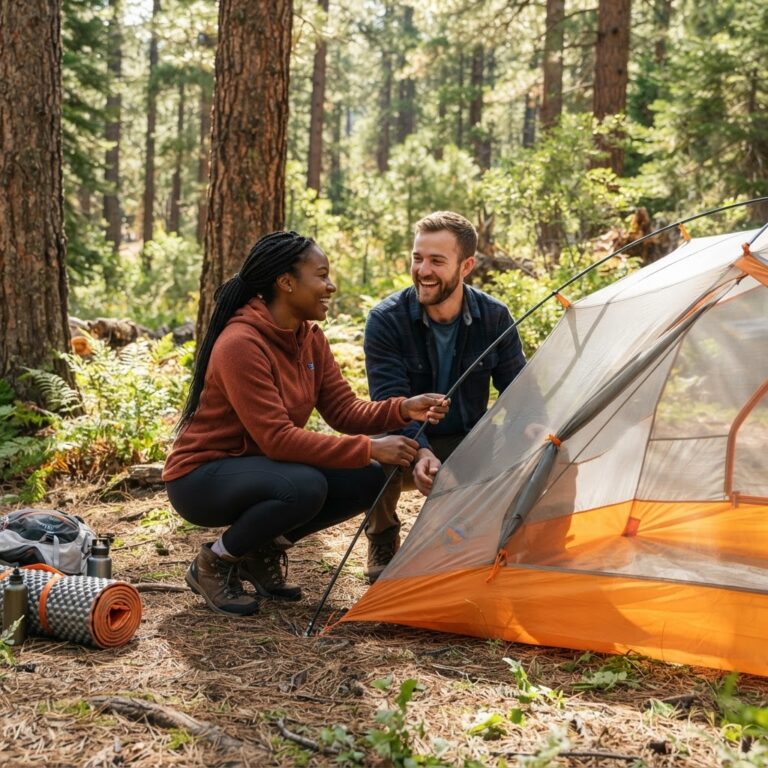
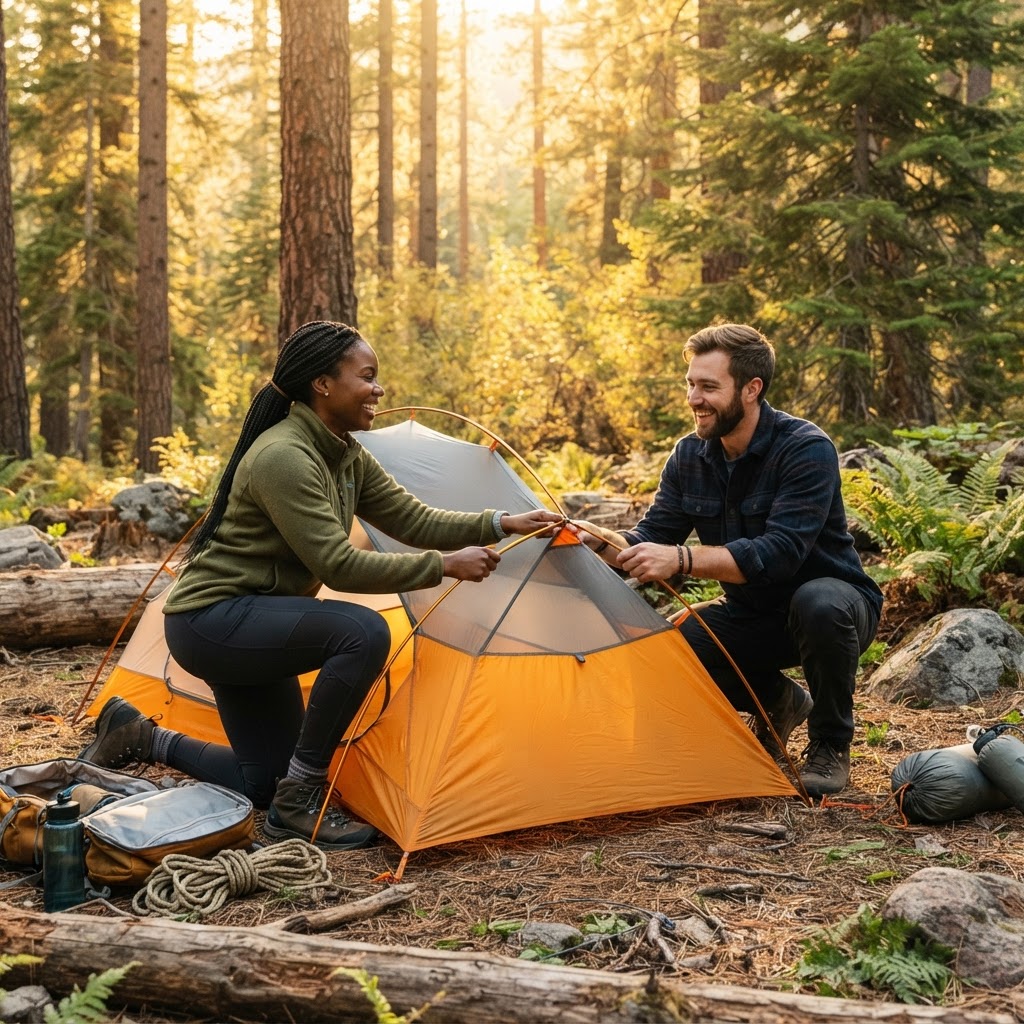
Practice your setup at home so it becomes muscle memory. A fast, confident pitch reduces errors that lead to wet gear or poor ventilation. Lay out a footprint or tarp first, line up your tent so the door faces away from prevailing wind but toward the morning sun, and stake the corners loosely before tensioning. Use guy lines for stability when wind is expected, and stake into firm ground at a low angle for best hold.
Tent ventilation matters for comfort and condensation control. Open vents on clear nights and use the rainfly strategically: in cool dry conditions consider removing the fly for airflow, then reattach if rain looks likely. Vent points near the roof let warm moist air escape while lower mesh panels pull in cooler air. If you want practical setup drills and safety tips for remote terrain, check the solo mountain camping safety guide at solo mountain camping: your essential guide to safety & adventure.
Organization and Camp Hygiene
Living in a small tent is like running a lean operation. Organization and hygiene are not glamorous, but they are essential for morale and health. A tidy camp increases productivity, reduces gear loss, and protects food and wildlife. Below are systems and routines that work for small groups and solos alike.
Keeping your gear organized in tight spaces
Use zoning to allocate space. Create a sleeping zone, cooking zone, and gear/entry zone. Keep dirty boots and wet clothing outside the sleeping area using a vestibule or a small tarp mat next to the door. Store food and scented items in a bear canister or locked vehicle when required, and otherwise in sealed containers away from your tent to reduce wildlife encounters.
Pack items you will need at night into a small bedside pouch: headlamp, water bottle, earplugs, and a lightweight layer. Store heavier items in predictable spots so you do not have to dig through everything after a long hike. Treat your tent like a micro office where quick retrieval of core tools speeds tasks and improves rest. If you want to expand your skillset for solo situations, the piece on 10 best tips for solo camping in the mountains safely provides strategies that complement organization routines.
Managing waste and camp cleanliness
Establish a simple waste plan before you leave home. Pack trash bags, small containers for recyclables, and a portable sealable container for food scraps. Follow Leave No Trace rules by packing out what you pack in. For human waste, follow local regulations. When burying waste is permitted, dig catholes 6 to 8 inches deep, at least 200 feet from water and trails. Otherwise use designated toilets or pack out waste with specialized kits.
Keep a cleaning kit: biodegradable soap, a collapsible basin, and a small scrub brush. Wash dishes at least 200 feet from water, using minimal soap, and scatter strained wastewater across a wide area. Wiping down surfaces nightly reduces critter attractants and keeps your tent interior pleasant. Small, consistent routines are more effective than heroic cleaning sessions at the end of a trip.
Comparison of Camping Tent Types
Picking a tent is about matching its strengths to your typical trip patterns. Consider durability versus weight, capacity, and weather tolerance. The right choice reduces friction every trip and makes setup a predictable routine you can rely on.
Evaluating durability versus weight
There is often a trade off between durability and weight. Heavier fabrics and robust poles improve longevity and comfort in tough weather, at the cost of carrying burden. For car campers or basecampers, choosing durability will pay off in comfort and reduced repair needs. For backpackers and those prioritizing speed, ultralight materials save energy but require more careful handling to avoid tears.
Think in terms of mission profile. If your trips are frequent short drives to established campgrounds, heavier tents that provide better ventilation and space are efficient. If you do long routes and need to minimize load, choose streamlined tents and accept that periodic repair patches are part of the lifecycle.
Selecting the right capacity for your group
Capacity ratings are optimistic. A two person tent might technically fit two sleeping pads, but add gear and you lose functional space. Choose a tent one size up if you value comfort, or select the exact capacity for minimalism and weight savings. For families and groups that need storage or standing height, look for designs with higher center lines and vestibules for gear staging.
Also consider ventilation when choosing capacity. Tents that pack more mesh and venting will help reduce condensation when multiple people occupy the same space. In damp environments good airflow often matters more to morning comfort than an extra foot of floor space.
Pro tip: Practice setting up any tent at least twice at home, once with rainfly on and once without. That familiarity cuts setup time and helps you troubleshoot ventilation and drainage before you are tired at the end of a hike.
Frequently Asked Questions
What is the most important thing to remember when tent camping?
The single most important thing is preparation. That includes choosing a safe campsite with good drainage, bringing the right camping gear, and knowing basic outdoor survival skills like navigation, first aid, and how to make shelter weatherproof. Preparation reduces risk and makes your time outside more restorative.
How do I keep my tent dry during a rainstorm?
Ensure your tent is pitched on level, elevated ground and use a waterproof groundsheet or footprint under your tent, leaving several inches of floor exposed at the edges to prevent water from collecting under the fly. Set up guy lines and stake the rainfly taut so water sheds away from seams, and keep vents open to manage condensation. If heavy rain is expected, create small drainage channels or position the tent where natural runoff will pass safely around it.
What are some simple ways to make a tent more comfortable for sleeping?
Layer a closed cell foam pad under an inflatable mattress for insulation and protection. Use a quality sleeping bag rated for conditions and a breathable liner for added warmth or hygiene. Keep a small pillow and a bedside pouch for essentials. Improve tent ventilation to reduce condensation and try to schedule chores so you enter the tent clean and dry, which significantly improves sleep quality.
Final Thoughts
Tent camping rewards thoughtful preparation, the right gear, and small routines that protect comfort and safety. Treat each trip like a tiny experiment, refine your systems, and you will find that the woods can be an efficient place to recharge.