
TL;DR:
- Arizona offers a huge variety of landscapes, from alpine forests near Flagstaff to the iconic Sedona red rock country and the Sonoran desert, and these are home to some of the best campgrounds in Arizona.
- For high elevation cool nights choose campgrounds in the Coconino National Forest or near Grand Canyon National Park, for desert sunsets pick Saguaro National Park or nearby sites, and for dramatic views Sedona campgrounds are hard to beat.
- Dispersed camping is widely available on national forest lands with basic rules, but developed campgrounds are recommended for first time visitors, families, and RV travelers.
Arizona is a giant playground where you can wake up in a snowy alpine forest and be sunbathing in the Sonoran desert by dinner time. If you are ready to trade your four walls for a night under the stars, here is exactly where you should set up camp.
This guide points you to the best campgrounds in Arizona, with real notes on scenery, accessibility, and what to expect at each spot. Whether you prefer towering pines, sculpted red rock backdrops, or sage scented desert vistas, there is a campsite that will feel made for your trip.
Table of Contents
- Northern Arizona’s High-Elevation Hideaways
- Desert Gems and Red Rock Retreats
- Quick Comparison: Top Arizona Campsites
- Frequently Asked Questions
- Final Thoughts
Northern Arizona’s High-Elevation Hideaways
Northern Arizona is where you find cool nights, ponderosa pine forests, and some of the most peaceful campsites in the state. If you want to camp near Grand Canyon National Park or breathe the crisp air of Flagstaff, this region delivers. These high elevation campgrounds are perfect for escaping summer heat, star gazing, and easy access to iconic hikes.
Camping in the shadows of the San Francisco Peaks
The San Francisco Peaks rise above Flagstaff and create a dramatic alpine backdrop for camping. Campgrounds around Flagstaff sit in tall forest with wide trails and abundant shade, which makes them a summertime favorite. Sites are often set beneath ponderosa pines, and you will notice the scent of resin in the air when you arrive.
Choose a campground with loop roads for easy parking and short hikes right from camp. In the evening, the clear high desert sky reveals so many stars that you will forget the city lights. If you want to sharpen your camping fundamentals before you go, consider reading this guide to master essential camping skills, which covers tent setup and low impact techniques useful in higher elevation sites.
Finding serenity in the Coconino National Forest
Coconino National Forest sprawls across varied terrain and contains pockets that feel remote even when they are close to small towns. There are developed campgrounds for people who want a picnic table and a restroom, and wide open dispersed camping options for people who want solitude. The forest is home to lakes, volcanic features, and forested ridgelines that offer easy day hikes from camp.
When you choose a spot in Coconino National Forest, expect cooler nights and a good chance of snow in winter. Summer temperatures are comfortable compared to the lower desert, and the variety of terrain means you can go from a forest stroll to a volcanic cinder cone hike in one day. If you are planning to tent camp and want practical tips on staying comfortable, this piece on tent camping tips has practical advice on site selection and staying warm at high elevation.
Desert Gems and Red Rock Retreats
Central and southern Arizona show a completely different side of the state. Think sculpted red rock formations, saguaro dotted valleys, and desert sunsets that change color every minute. Campgrounds here vary from creekside pockets in canyons to desert camps under saguaro arms, and each offers a unique way to experience the wide open west.
Unbeatable red rock views in Sedona
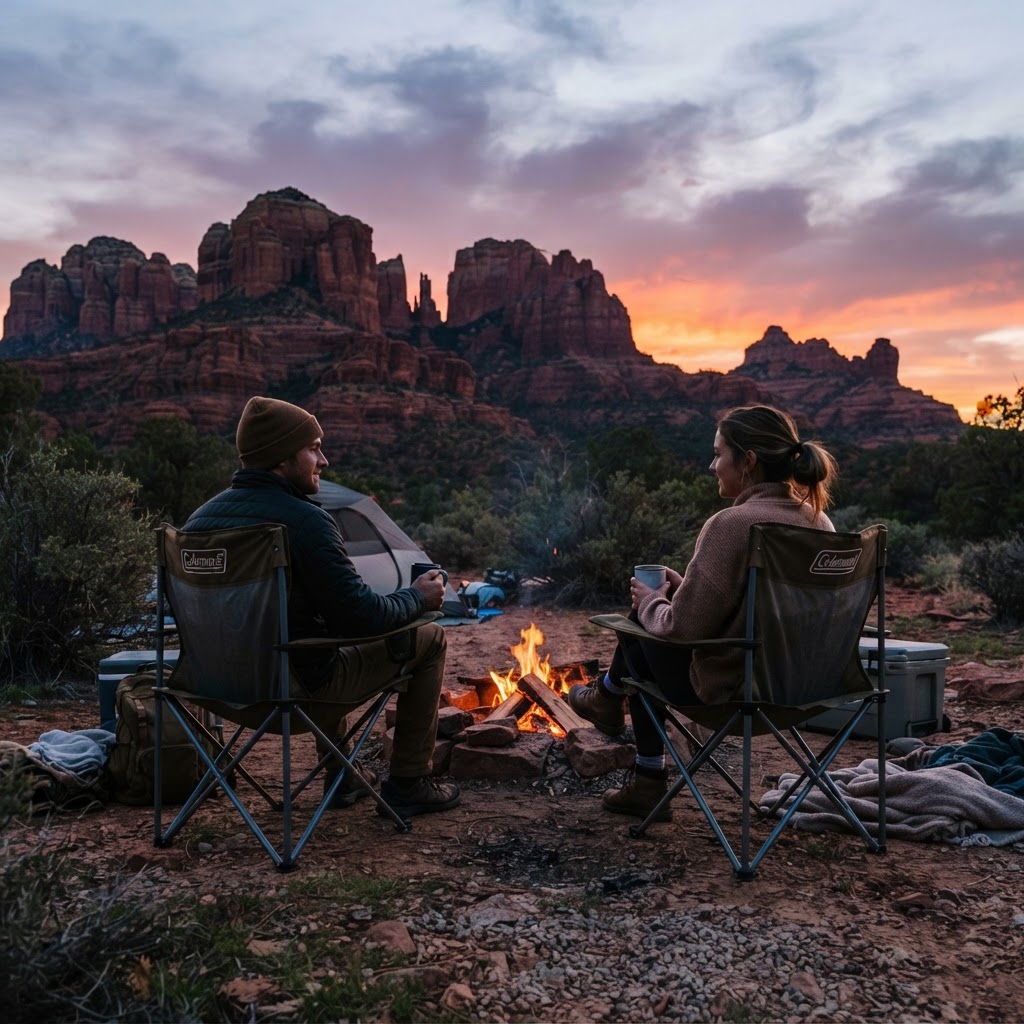
Sedona is synonymous with red rocks and dramatic landscapes. Campgrounds around the area deliver sunrise and sunset views that look like paintings. Some sites sit against sheer red walls or near oak and juniper groves that soften the desert heat. In spring and fall the weather is perfect, and you can hike from camp into famous formations and slot canyons.
Popular Sedona campgrounds tend to book up quickly, so plan ahead for weekends. If you want a spot that combines convenience with scenery, look for campgrounds close to trailheads. When you camp near Sedona red rocks, bring layers for chilly mornings and strong sunscreen for afternoons. Cave Springs Campground is a classic example of a creekside campsite with red rock views, and it feels restful after a day on the trails.
Experiencing the magic of Saguaro National Park camping
Saguaro National Park protects a sea of saguaro cacti, and camping near these giants feels special in a way you will not find anywhere else. The park is divided into two districts, each with different experiences. Campgrounds in the Tucson area place you close to desert trails, scenic drives, and excellent bird watching. Sunrise often paints the cacti in soft pink and gold light, which is worth getting up early for.
The desert is dry and often hot during summer, but fall through spring is ideal for camping. Nights cool quickly, which makes stargazing outstanding. While Saguaro National Park does not have large developed campgrounds inside its main boundaries, the surrounding national forests and state parks offer nearby developed sites and primitive options. For those who prefer to roam, dispersed camping is possible in surrounding public lands with basic rules to follow for safety and preservation.
Quick Comparison: Top Arizona Campsites, best campgrounds in Arizona
Below is a breakdown to help you choose the right campsite based on what matters most to you. Whether you want convenience, dramatic scenery, or a true backcountry feel, this section lays out the trade offs so you can pick confidently.
Choosing between developed sites and dispersed camping
Developed campgrounds give you amenities like restrooms, established fire rings, and picnic tables. They are ideal for first time campers, families, and anyone who wants less planning. Many of Arizona s top campgrounds are developed and provide reliable access to trails and scenic overlooks.
Dispersed camping, most commonly allowed on national forest lands, means you choose your spot away from a developed loop. It affords solitude and cheap or no fees, but comes with more responsibility. You will need to pack out what you pack in, manage your own water supply, and follow rules about campfires and wildlife. If this is your first time considering dispersed camping, read up on basic techniques in the camping skills guide, such as the one here on how to master essential camping skills, which covers Leave No Trace practices that are crucial for dispersed sites.
Best seasons for specific Arizona regions
Arizona s varied elevation creates distinct camping seasons. High elevation forests and campgrounds near Flagstaff, and near Grand Canyon National Park, are best from late spring through early fall. These places offer summer relief from heat and lush scenery. Sedona and other red rock areas shine in spring and fall, when temperatures are comfortable and wildflowers or autumn color may appear.
The low desert, including the region around Saguaro National Park, is most pleasant in winter and early spring. Summer can be very hot, with daily temperatures that are dangerous for extended outdoor activity. Plan your trip by region and time of year for the best experience. For example, scheduling a Sedona trip in October often gives you warm days and crisp nights, ideal for campfires and long hikes.
Pro tip: If you are flexible with dates, aim for midweek stays. You will find quieter campgrounds, easier parking at trailheads, and a better chance to snag that perfect site under pines or near a creek.
Frequently Asked Questions
Do I need a permit for dispersed camping in Arizona?
Dispersed camping rules vary by land manager and location, but in general you do not need a permit for dispersed camping on many national forest lands, including parts of Coconino National Forest. However, some areas require a free registration or a permit for extended stays or for camping in special management zones. Always check the managing agency s website before you go, follow campfire regulations, and use established pullouts or previously used sites to minimize impact. If you are near a national park such as Grand Canyon National Park or Saguaro National Park, note that dispersed camping is typically not allowed inside park boundaries, and park backcountry permits may be required for overnight backcountry trips.
When is the best time of year to camp in Arizona?
The best time depends on the region. For high elevation areas such as Flagstaff and campgrounds near Grand Canyon National Park, late spring through early fall provides the most comfortable conditions. Sedona and other red rock areas are best in spring and fall. The Sonoran desert and camps near Saguaro National Park are ideal in winter and early spring. Summer can be very hot in lower elevations, and monsoon season usually occurs midsummer, bringing brief but intense storms. Plan around temperature, daylight, and weather for the region you plan to visit.
Are there campgrounds in Arizona with full hookups?
Yes, Arizona does have campgrounds with full hookups, especially near larger towns and popular tourist areas. Look for private and state run campgrounds that advertise water, electric, and sewer hookups, or RV parks near cities such as Flagstaff and Tucson. Many public campgrounds in national forests and national parks offer more basic amenities, so if you need hookups, search specifically for RV friendly developed campgrounds and reserve early, because spots with full hookups fill quickly during peak season.
Final Thoughts
Arizona offers a rare chance to camp in wildly different landscapes within a single trip, from ponderosa pine shade to towering saguaro and red rock amphitheaters. Pick the region that fits your rhythm, plan for the season, and you will find some of the best campgrounds in Arizona waiting for you under the stars.