
TL;DR:
- Solo camping in the mountains rewards careful planning, the right camping gear, and practiced wilderness survival skills.
- Prioritize navigation techniques, mountain meteorology knowledge, and wildlife safety to reduce risk.
- Carry reliable emergency communication, a focused first aid kit, and a clear plan for unexpected weather or injuries.
Dreaming of the serene solitude and breathtaking vistas that only solo mountain camping can offer? Imagine setting up camp under a canopy of stars, miles from the everyday hustle. This guide is your seasoned companion for a safe and rewarding mountain adventure.
Solo camping in the mountains can be transformative, but it requires respect for the environment, solid preparation, and attention to safety. Read on for a complete roadmap from essential gear through navigation and emergency strategy, presented in clear, practical steps you can follow before and during your trip.
Table of Contents
- Essential Gear for Solo Mountain Adventures
- Navigating Mountain Terrain with Confidence
- Safety First: Solo Camping Best Practices
- Frequently Asked Questions
- Final Thoughts
Essential Gear for Solo Camping in the Mountains
When you are planning solo camping in the mountains, gear choices are the backbone of safety and comfort. The right items reduce risk, support wilderness survival, and free attention for enjoying the scenery. Below is a focused breakdown of what to carry and why each piece matters when you are alone and far from help.
The Ten Essentials: Beyond the Basics
Many outdoors people rely on the Ten Essentials as a checklist for survival and comfort. For solo mountain trips expand that list to emphasize redundancy and lightweight reliability. At minimum include navigation tools, a means to make fire, a reliable headlamp with spare batteries, extra food and water, sun protection, an emergency shelter, a knife or multi tool, a first aid kit, a whistle, and a communication device. Each item supports a specific wilderness survival need, from signaling for help to treating injury and staying warm.
Think in layers of redundancy. For navigation carry a paper map and compass, plus a battery powered GPS device. For fire, bring multiple ignition sources. For water, have a filtration method and chemical treatment tablets. When choosing solo hiking gear, focus on compact, multi purpose pieces. Lightweight does not mean trade safety for grams, it means choosing efficient gear that performs well in mountain meteorology conditions.
Choosing the Right Shelter and Sleep System
Your shelter and sleep system determine how well you recover each night and how you withstand cold, wind, and precipitation. In mountain environments aim for a shelter that resists strong wind and sheds rain. Consider a tent with a low profile and full rain fly, or an ultra durable tarp arrangement if you have high level experience in shelter construction.
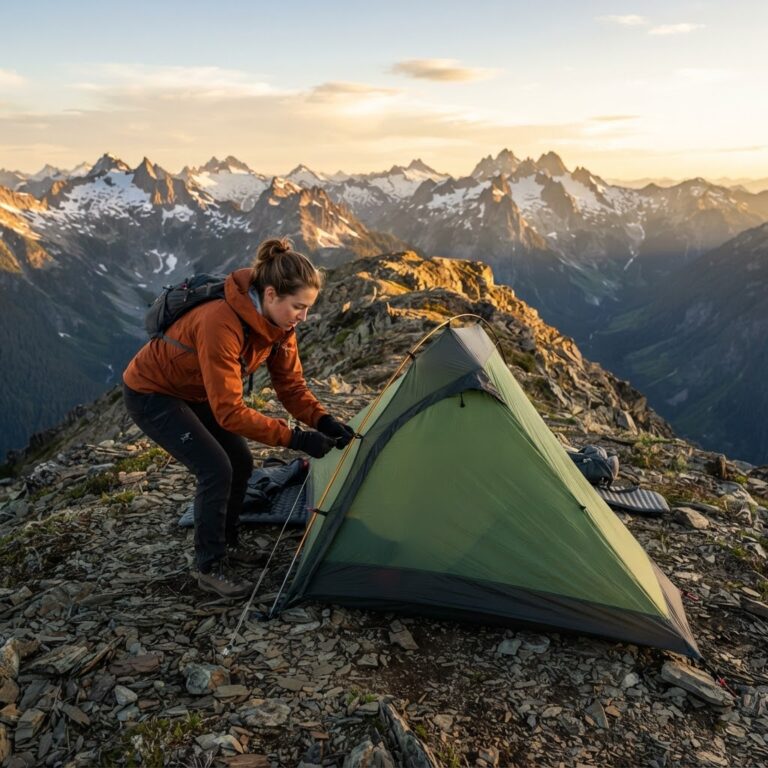
Sleep systems should address insulation more than warmth alone. At higher elevations the air is thinner and temperatures can drop sharply. Pair a sleeping bag rated below the expected low temperature with an insulated sleep pad to prevent conductive heat loss. A reliable bivy sack or lightweight emergency blanket provides a last line of defense. Practice setting up shelter in daylight before relying on it after a long day of hiking.
For practical skill building, review foundational techniques before your trip. The article on essential camping skills explains core competencies such as firecraft and knot work. For shelter and tent specific advice, detailed tent camping tips are useful when you select and pitch your tent.
How To Master Essential Camping Skills For Your Next Outdoor Adventure
Navigating Mountain Terrain with Confidence
Navigation is where many solo trips succeed or fail. Mountains can confuse orientation with similar ridgelines, shadowed valleys, and sudden weather changes, so strong navigation techniques are essential. Combine traditional skills with modern tools for the best results. Below are concrete practices to build confidence in route finding and hazard recognition.
Mastering Navigation: Map, Compass, and GPS
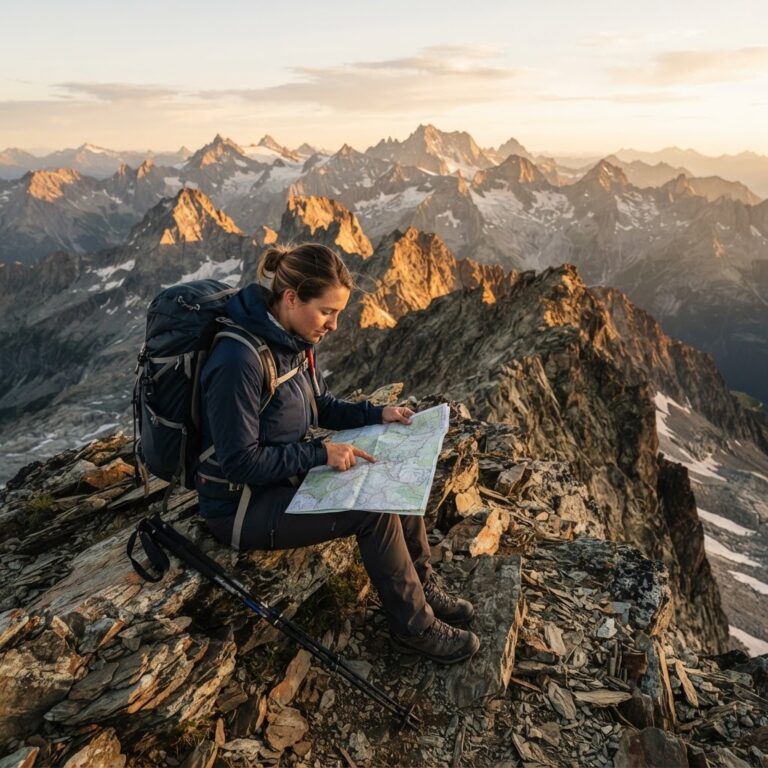
Start with a topographic map of your route. Learn to read contour lines, identify watershed boundaries, and recognize common terrain features like saddles, ridgelines, and cliffs. A compass is reliable hardware that never needs satellite coverage. Practice orienting the map to the landscape and taking bearings so converting azimuths to a physical route becomes second nature.
GPS devices are valuable as long as you respect their limits. Carry spare batteries or a way to recharge and download offline maps for the specific area. Record waypoints at trailheads, junctions, and water sources. If you leave the official trail, mark each deviation so you can find your way back. Familiarize yourself with simple pacing techniques and timing estimates, because batteries fail and service can be absent in remote ranges.
Understanding Weather Patterns and Avalanche Risks
Mountain meteorology is complex but patterns repeat, and learning to read them reduces exposure to severe conditions. Watch for rapid cloud build up, uphill cloud movement, sudden drops in temperature, and wind shifts. Mornings often offer stable conditions before afternoon convective clouds develop. If overnight forecasts predict storms, adjust your plan to avoid exposed campsites.
Avalanche risk is a specialized hazard in winter and late season snow fields. Learn avalanche basics before traveling in snow. Check local avalanche bulletins, understand snowpack layers, and practice rescue skills with an avalanche beacon, probe, and shovel. Even in non avalanche terrain stay away from steep, wind loaded slopes after heavy snowfall. If you are unsure, reroute to safer ridgelines or valley paths.
Safety First: Solo Camping Best Practices
Safety while solo camping in the mountains relies on preparation, situational awareness, and confidence in your wilderness survival toolbox. When you are alone there is no second set of hands, so make prevention and simple, practiced responses your default approach. This section focuses on wildlife safety and emergency planning so you can reduce risk and act decisively if something goes wrong.
Wildlife Awareness and Prevention
Wildlife safety starts with prevention and respect. Store food securely away from your sleeping area, and avoid cooking near your tent. Use smell proof containers or hang food where permitted. Be aware of species specific behavior. For large predators, make noise while approaching blind corners and maintain a respectable distance if you see them. Never feed wildlife, and be careful with scented toiletries that may attract curious animals.
Learn common signs of animal activity, such as tracks, scat, and scratch marks on trees. If you encounter a potentially dangerous animal, remain calm, assess its behavior, and back away slowly. Have a plan for close encounters. Practice controlled responses at home so you do not panic in a real situation. The goal is prevention first, avoidance second, and if a direct threat occurs, a calm and decisive response.
Emergency Communication and First Aid
Carrying a reliable communication device is non negotiable. Cell service is often unreliable in mountainous regions, so consider a satellite messaging device or personal locator beacon. These tools allow you to send for help when needed. Before your trip register any required trip plans with authorities and provide a detailed itinerary to someone at home, including planned return times and checkpoints.
A compact first aid kit tailored to likely mountain injuries is essential. Include supplies for wound care, splinting, blister prevention, and treatment for hypothermia. Learn basic first aid skills and practice them in realistic scenarios. Prioritize training that covers stabilization and evacuation planning since the need to move a patient over rough terrain changes the equipment and response needed.
Pro tip: Rehearse one emergency scenario until the steps are automatic. Muscle memory reduces stress and improves outcomes when every minute counts.
For more practical tips on tent selection and campsite setup that improve safety and comfort, review tent camping guidance and shelter strategies before you go. Proper tent technique reduces exposure and helps you sleep better if conditions turn difficult.
Ultimate Tent Camping Tips and Tricks for an Amazing Outdoor Adventure
Additionally, a short checklist of solo specific actions helps. Leave a detailed itinerary with a trusted contact, check in at established trailhead registers when available, and plan exit options for each day. Familiarity with basic rescue signaling increases chances of rapid assistance.
10 Best Tips for Solo Camping in the Mountains Safely
Frequently Asked Questions
What is the biggest risk when solo camping in the mountains?
The biggest risk is exposure in the form of weather related injury or hypothermia, often compounded by delayed help. Mountain weather can change rapidly, and being alone increases vulnerability. Prevent this by checking mountain meteorology reports, packing proper insulation and waterproofing, choosing sheltered campsites, and carrying reliable emergency communication. Good navigation reduces the chance of becoming lost and spending an unplanned night exposed to the elements.
How do I stay safe from wildlife when camping alone in the mountains?
Wildlife safety centers on minimizing attractants and maintaining awareness. Store all food and scented items away from your sleeping area using approved storage techniques, cook at a distance from your tent, and avoid leaving scraps. Travel with noise in areas of low visibility to warn animals, and learn how to interpret animal behavior. If you encounter wildlife, remain calm, do not run, and use deterrent actions recommended for the species you may meet. Prevention is the most effective strategy.
What essential items should I pack for my first solo mountain camping trip?
Pack a reliable shelter and sleep system rated for expected temperatures, navigation tools including map and compass, a first aid kit with trauma items, layered clothing for mountain meteorology, sufficient food and water with a purification method, a headlamp with spare batteries, multiple fire starting methods, a multi tool, and an emergency communication device. Add small comforts that relieve stress like a lightweight cooking set and an extra insulating layer. Prioritize items that support survival, navigation, and communication.
Final Thoughts
Solo camping in the mountains is a powerful way to build confidence and find clarity, provided you respect the environment and prepare carefully. With the right gear, navigation techniques, and safety habits you can turn an ambitious idea into a memorable and safe adventure.