

TL;DR:
- Learn core camping skills such as choosing a safe pitch, pitching a tent properly, and practicing Leave No Trace principles to keep the environment and your trip safe and enjoyable.
- Prioritize outdoor cooking and food safety with the right camp stove techniques and secure food storage to avoid wildlife encounters.
- Pick gear that matches your style, focusing on a proper sleep system and reliable lighting, and practice navigation and campfire safety before you head into the backcountry.
There is something uniquely refreshing about waking up to the sound of birds rather than an alarm clock, but the difference between a relaxing retreat and a survival ordeal often comes down to your preparation. In this guide, we will break down the essential camping skills you need to turn any campsite into a home away from home.
Whether you are planning a weekend tent trip, a multi day backpacking route, or want to run a campsite that doubles as a creative retreat for your team, these practical tips will help you feel calm and capable in the outdoors. Think of this as a toolbox of skills you can carry in your head and pull out when the weather, terrain, or an unexpected challenge shows up.
Table of Contents
- Mastering the Fundamentals of Campsite Setup
- Essential Outdoor Cooking and Food Safety
- Essential Camping Gear Comparison for Camping Skills
- Frequently Asked Questions
- Final Thoughts
Mastering the Fundamentals of Campsite Setup
Getting a campsite right is one of the fastest ways to improve your comfort and safety outdoors. The core camping skills for setting up an efficient, durable, and low impact camp are the same whether you are parking near a trailhead or hiking into the backcountry. Focus on site selection, shelter placement, and environmental care to lay a foundation that makes everything else easier.
Choosing the Perfect Pitch Site
Start by scouting several candidate spots, then weigh safety, comfort, and environmental impact. Look for level ground that is not in a drainage pathway. Avoid the lowest point in a field where water can pool during sudden rain. Check for hazards such as dead branches above, loose rocks underfoot, and infestations or animal signs. A bit of shade can be a blessing during hot afternoons, but complete shade all day can mean damp gear in the morning.
Another key part of site selection is thinking about the campsite through the lens of Leave No Trace principles, especially when you are in fragile terrain. Choose durable surfaces like established tent pads, rock, or gravel rather than trampling vegetation. If you are backpacking, consult your route plan and try to camp near your planned water source without disturbing shorelines.
Pitching Your Tent Like a Pro
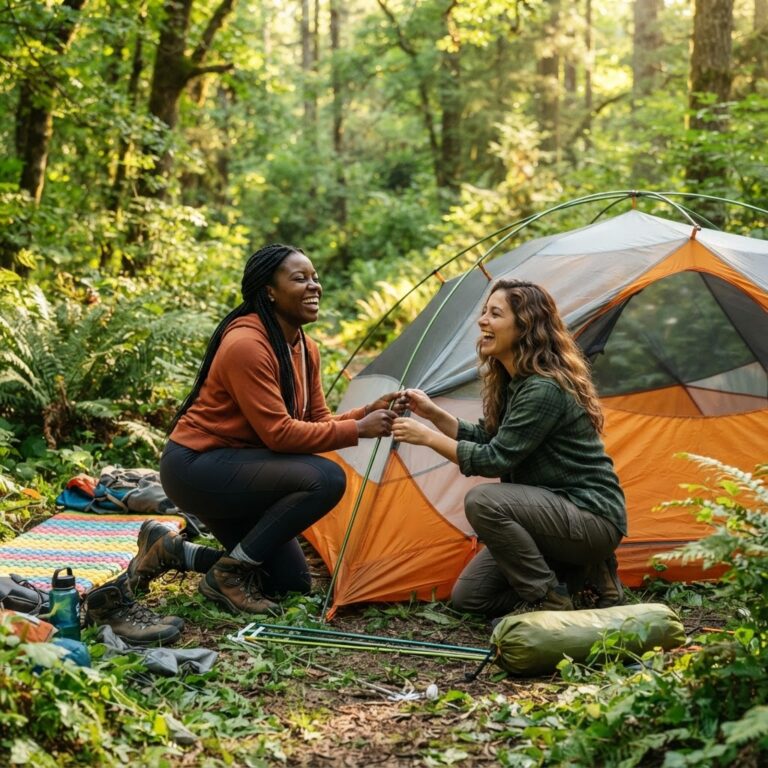
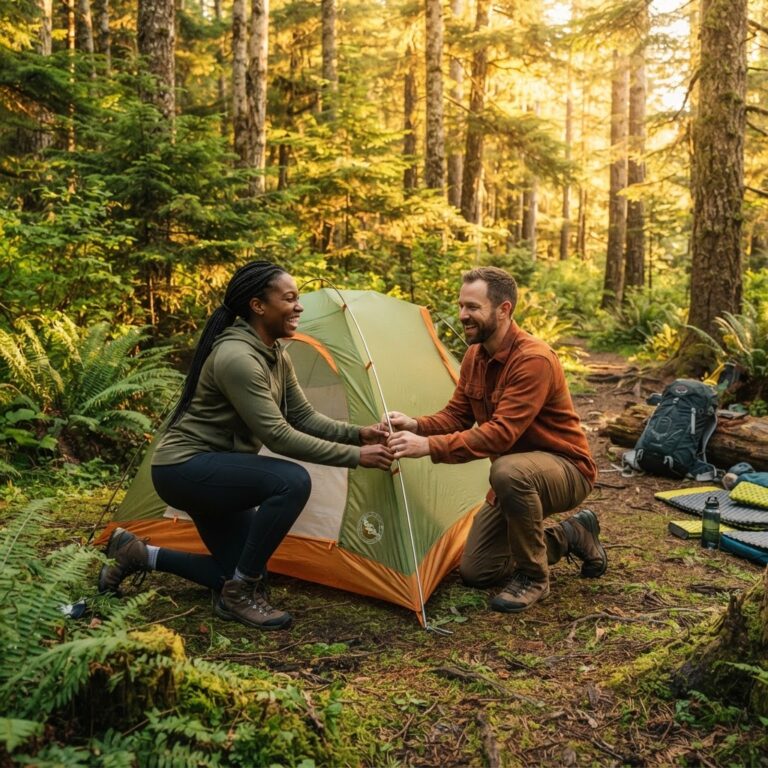
Pitching a tent quickly and correctly is a core camping skill that saves time and frustration. Before you stake anything, clear the site of debris and smooth out sharp objects. Lay your footprint or groundsheet first to protect the tent floor from abrasion and moisture. A simple order of operations is to orient the tent door toward an accessible area, assemble the poles, attach the rainfly if the forecast calls for rain, and then stake the corners tautly to improve wind resistance. Tight guylines reduce flapping and increase the shelter life of your shelter.
Practice pitching at home so you can do it blindfolded in a light drizzle if you have to. Use natural features for windbreak when possible, and avoid valleys where cold air pools at night. If you are on soft soil, angle stakes away from the tent and drive them in at about 45 degrees for better hold. For rock or hard ground, use rocks or heavy gear to anchor guylines. These small techniques multiply comfort and reduce late night repairs.
Essential Outdoor Cooking and Food Safety
Food is both morale and fuel on a trip, but food that is prepared poorly or stored carelessly can attract wildlife and cause illness. Mastering outdoor cooking and packing for hygiene will keep your energy high, the camp smells neutral, and the local animals safe from human food.
Mastering the Camp Stove
Camp stoves make it possible to cook reliably in most conditions, and learning a few stove skills ensures efficiency and safety. Start by familiarizing yourself with lighting and controlling heat on the stove before you are hungry. Use wind screens to block gusts that blow out flames or rob heat. Simmer with low flame settings rather than repeatedly turning the burner on and off, which wastes fuel. Practice layering meals that require minimal pots and pans to reduce cleanup and conserve water.
Always set up the stove on stable, non flammable surfaces away from the tent and overhangs. Keep fuel containers sealed and stored in a cool place, and never store cooking fuel inside your sleeping shelter. Practice extinguishing the stove and letting it cool completely before packing. A small routine of cleaning the stove and wiping spills after each use helps keep odors down and prevents lingering smells that animals can detect.
Proper Food Storage and Bear Safety
Proper food storage is a mix of technique and respect for wildlife. Use approved storage containers or bear canisters in areas where required. When those are not mandatory, suspend food at least 12 feet off the ground and 6 feet from the nearest trunk if you are hanging food in a tree. Store any scented items like toiletries and trash with food, because animals are attracted by odor not by wrappers.
When camping in established sites, make use of provided food lockers or secure your supplies in your vehicle. If you are in bear country, cook and eat at a separate area away from your sleeping spot to reduce the chance of an animal investigating your shelter. Campfire safety and keeping your cooking area clean go hand in hand. Never leave a fire unattended and fully extinguish embers before bed. Follow local rules and the Leave No Trace principles on food storage and sanitation to protect the animals and the environment.
Essential Camping Gear Comparison for Camping Skills
Choosing the right kit is less about buying the most expensive piece and more about matching gear to how you camp. Whether you are a day tripper who wants a cozy base camp for content creation, or an entrepreneur planning a team bonding backpacking trip, understanding the trade offs will help you invest in items that truly improve your experience.
Choosing Your Sleep System
Your sleep system determines how rested you will be. The main elements are the sleeping pad, the sleeping bag or quilt, and a breathable liner. Look at temperature ratings and then add a buffer for unexpected cold nights. Inflation type pads offer more comfort at the expense of small puncture risk, while foam pads are nearly indestructible but bulkier. In cooler environments, prioritize insulation value over minimal weight.
Think in layers rather than a single item to manage weight and adaptability. A lighter sleeping bag plus a compact insulating layer can give you more options for varying temperatures, and it is easier to reuse parts of the system across multiple seasons. If you are backpacking, always test the fit of everything so that sleeping items compress well into your pack and do not leave you carrying awkward dead space.
Navigating Lighting and Utility Tools
Light sources and small utility tools are the glue that keeps a campsite functional after dark. A headlamp offers hands free light for cooking and repairs, and a low level lantern improves group visibility without the glare. Carry spare batteries or a charged power source and check runtimes before you leave. Waterproof or water resistant designs survive damp evenings and rain showers better.
Utility tools such as a compact repair kit, a small first aid kit, and a multi tool protect you against common problems. Repair kits should cover tent seams, poles, and pad punctures. Practice basic repairs at home so that when a zipper traps a sleeping bag or a pole snaps, you know which patch or splint to reach for. Navigation and orienteering skills complement these tools. A reliable map and compass, and the knowledge of how to use them, keep you on track when electronics fail.
Pro tip: Practice night setup and stove use in a low stress environment before a big trip. That way a sudden rain or an unexpected sunset will not scramble your routine.
Frequently Asked Questions
What is the most important camping skill for beginners?
The most important camping skill for beginners is choosing and preparing a safe campsite, because a good site reduces the chance of weather related discomfort, wildlife encounters, and sleep disruption. This includes picking level durable ground, pitching your tent properly, and following Leave No Trace principles. Mastering these basics makes lighting a stove and navigating the trail easier because you are starting from a solid foundation.
How can I keep my food safe from animals while camping?
Keep food safe by storing it in approved containers when required, or hanging it using a proper hanging method in areas without lockers. Store any scented products with food, and cook and eat well away from where you sleep. Clean up cooking areas immediately and pack out or securely store trash. Following campfire safety and using established storage solutions are practical ways to reduce wildlife attractants.
What are the best ways to stay warm on a cold camping night?
Stay warm by layering clothing, using an insulated sleeping pad, and choosing a sleeping bag rated for lower temperatures than you expect. Avoid cotton near your skin in cold weather, keep a dry set of clothes for sleeping, and consider a sleeping bag liner for extra warmth. Proper site selection that avoids cold air pools and using a small hot water bottle wrapped in a cloth can also add warmth safely.
Final Thoughts
Good camping skills are a compounding advantage. Learn the fundamentals of campsite setup, cook and store food safely, and invest in gear that matches how you camp. With a few practiced skills and respect for the outdoors, you will turn each trip into a predictable, enjoyable experience that leaves the place better than you found it.
For more focused tips on related topics, check out detailed advice on tent camping setup and maintenance at tent camping tips and tricks, and if you plan to carry everything on your back, these backpacking adventure tips will help you refine your approach. If you are considering a solo mountain trip, review safety strategies in this solo mountain camping guide.