

TL;DR:
- Plan ahead, pick an easy first site, and tell someone your plan before you head out.
- Pack a lightweight, reliable shelter and a focused solo camping gear list so you are comfortable and safe.
- Practice setup at home, stay mindful of weather and wildlife, and use simple safety routines to enjoy the experience.
The thought of sleeping under the stars completely alone can be equal parts exhilarating and terrifying. If you are thinking about solo tent camping for the first time you are not alone, and with the right preparation you can turn nervous energy into a confident, joyful outdoor night.
This guide walks you through everything a first timer needs to know, from safety planning and beginner solo camping tips to a practical solo camping gear list and how to camp alone without overthinking it. Read on, take a breath, and let the excitement win.
Table of Contents
- Essential Preparation and Safety for Solo Campers
- Must-Have Gear for Solo Tent Camping
- Choosing Your Camping Shelter Style
- Frequently Asked Questions
- Final Thoughts
Essential Preparation and Safety for Solo Campers
Solo tent camping for the first time is a different animal compared to group outings. When you are the only decision maker you need to be a little more deliberate about planning and safety. This section covers the most important pre trip items, how to pick a beginner friendly spot and the communication steps that keep you connected and safe.
Choosing a beginner-friendly campsite
For a first solo trip aim for a campsite that is easy to access and close to help if you need it. A developed campground with defined plots, potable water, restrooms and visible neighbors gives you a safety buffer while you build confidence. Look for flat tent pads, a short walk from the parking area and minimal terrain hazards. These features reduce setup stress and shorten the time you are exposed to unknowns.
Research the location before you go. Check weather forecasts, trail and road conditions, and the presence of any wildlife you should be aware of. Read recent trip reports or reviews to get a sense of seasonal issues like insects or high water. If you prefer some solitude but want assistance nearby, consider reserving a site at the edge of a campground, or a dispersed site inside a park with ranger presence.
Creating a safety plan and communication strategy
A clear safety plan is one of the best ways to enjoy solo camping for the first time. Start by telling a trusted contact your itinerary. Share arrival and departure times, campsite location, and contingency plans for bad weather or delayed return. Agree on check in times and what to do if you miss a check in. Simple consistency keeps others from worrying and gives you an easy safety net.
Bring multiple ways to communicate. A fully charged phone with a portable charger is important, but do not rely on cell coverage alone. Consider a personal locator beacon or a satellite messenger for remote areas, and carry a whistle and headlamp for immediate signaling. Learn basic navigation skills and paper map reading as a backup. Finally, practice emergency tasks at home, like setting up a tarp or starting a small stove in a controlled environment, so you are less flustered if things go sideways.
Must-Have Gear for Solo Tent Camping
Packing light is a big part of solo tent camping for the first time, but light does not mean leaving essentials behind. Your gear choices should balance weight, ease of use, and reliability. Focus on items that increase comfort and safety, and avoid overpacking novelty items that add bulk.
Choosing the right tent for solo setup
For a first solo trip prioritize a shelter that is easy to pitch, roomy enough for you and your gear, and durable in local weather. A single person tent with a little extra interior volume is great because it keeps weight down while giving you space to dress or store a pack. Freestanding designs are forgiving during setup, which is helpful if you are alone or dealing with wind.
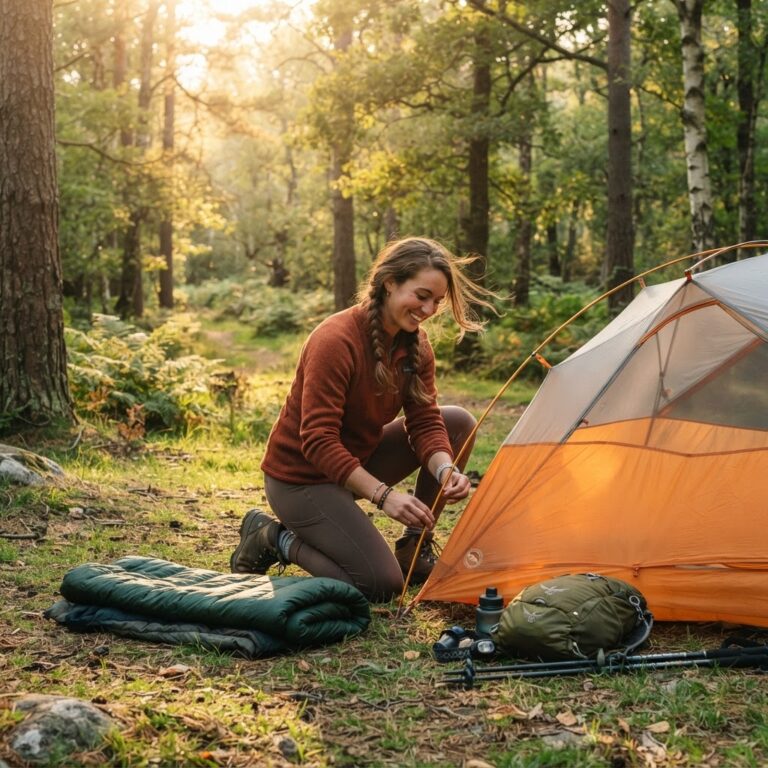
Practice pitching your tent at home so you can do it quickly after you arrive. Time yourself, then repeat until you can pitch it in low light. Knowing how your tent behaves in various conditions reduces stress and improves your ability to respond to rain or wind. Also check that your tent repair kit is accessible and that you know how to use it.
Essential gear checklist for your first night out
Below is a focused solo camping gear list that balances comfort and simplicity. Adjust quantities based on season and length of trip, but do not omit core safety items.
- Shelter: Tent, footprint or tarp for ground protection, and full set of stakes.
- Sleep system: Sleeping bag rated for expected temperatures, sleeping pad for insulation and comfort, and a small pillow or stuff sack with clothes for head support.
- Layered clothing: Moisture wicking base layer, insulating mid layer, weather resistant outer layer, extra socks, and a warm hat.
- Cooking and hydration: Small stove, fuel, lightweight cookware, utensil, lighter and waterproof matches, and at least two liters of water plus a way to filter or treat water if needed.
- Light and power: Headlamp with spare batteries, small lantern if desired, and a power bank for phone charging.
- Navigation and communication: Map, compass, fully charged phone, and a communication backup like a personal locator beacon when appropriate.
- First aid and safety: Compact first aid kit, insect repellent, sunscreen, whistle, multi tool, and a small repair kit for tent and pad.
- Food: Easy to prepare meals and snacks that provide energy, plus a small bag for trash.
- Comfort and extras: Lightweight camp chair or sit pad, toothbrush and quick hygiene kit, and a small notebook or entertainment item.
- Bear safety where applicable: Food storage system or safe container, and knowledge of local rules.
Before you leave, do a gear rehearsal. Lay everything out and pack it as you would in the field. Make a checklist and cross items off as you load them. The act of packing deliberately reduces forgotten items and builds confidence.
Choosing Your Camping Shelter Style
Choosing the right shelter is about matching your comfort level and trip goals to a tent style. Solo tent camping for the first time is the perfect opportunity to pick a shelter that is forgiving during setup while still being functional for the conditions you expect to face.
Comparison of tent styles for solo adventurers
Single wall tents are lightweight and reduce condensation in some conditions, but they can be hotter in warm weather and may need careful venting. Double wall tents have an inner mesh body with a separate rain fly, which can improve ventilation and modularity. They are often more roomy and easier to dry if wet.
Freestanding dome tents are a popular choice because they are stable and easy to move around before staking. They typically provide a comfortable living area and an easy pitch process, which is helpful when setting up alone. Ultralight tents save weight on backpacking trips, but they often require more attention to pitch technique and ground selection.
Factors to consider when buying your first tent
When you evaluate tents think about season rating, floor area, packed size and actual weight. A three season tent is fine for most spring to fall trips. If you expect cold weather or snow choose a shelter rated for those conditions. Floor area matters because a tiny one person tent can feel cramped with a pack inside, so consider a slightly larger solo tent or a one person tent with a vestibule for gear storage.
Also factor in rain protection and ventilation. A well designed rain fly and good seam sealing keep you dry. Mesh panels and vents reduce condensation, which is a common source of discomfort on first trips. Finally think about setup speed and how you are transporting the tent. If you are driving to the site and carrying a little extra weight, a more comfortable, heavier tent makes sense. If you are hiking miles to reach your site, prioritize weight and packed size.
Pro tip: Practice pitching your tent at home twice, once in daylight and once in the dark, so setup becomes muscle memory before your trip.
Frequently Asked Questions
Is it safe to go camping alone for the first time?
Yes, it can be safe when you plan carefully and choose an appropriate first site. Opt for established campgrounds or areas with other people nearby. Tell someone your exact plan, bring reliable communication tools, and pack a comprehensive first aid kit. Learn a few basic safety skills like starting a small fire safely, treating minor injuries, and handling weather changes. Avoid risky behavior like hiking alone on unfamiliar terrain at night. With these precautions you can greatly reduce the main risks and enjoy a secure solo experience.
How do I keep myself entertained while camping solo?
Solitude offers an opportunity to slow down and enjoy simple activities. Bring a lightweight book or an audiobook, a small journal, or a deck of cards. Plan short, achievable hikes during daylight to explore, or collect a small nature sketch book and record what you see. Cooking can be a meditative activity, so try a meal you enjoy that is easy to prepare outdoors. Photography and bird watching are portable and rewarding hobbies. The key is to have a few options but not overload your pack with entertainment that adds stress.
What should I do if I get scared at night?
Feeling scared at night is natural, especially the first time you sleep alone outdoors. Start with practical steps that lower adrenaline. Turn on your headlamp and check your surroundings to remind yourself everything is in order. Play calming music or a podcast at low volume if that soothes you. Use familiar routines like a warm drink or reading a chapter of a book to signal to your brain that you are safe. If the worry continues, contact your check in person for a quick voice exchange. Breathing exercises and focusing on visible stars can help too. Remember that preparation greatly reduces the things to fear, and most night noises are harmless wildlife and wind.
Final Thoughts
Solo tent camping for the first time is a powerful, rewarding step. With thoughtful planning, a compact solo camping gear list, and simple safety habits you can transform nerves into confidence and create a memorable outdoor night.