
TL;DR:
- Learn how to master essential camping skills by focusing on shelter setup, safe fire and cooking, and choosing gear that matches your trip style.
- Practice tent pitching, basic wilderness navigation, and Leave No Trace principles at home before you go, so campsite problems do not become emergencies.
- Pack the right blend of lightweight backpacking gear or car camping comforts, and always prioritize food safety and campfire safety to protect you and the environment.
Have you ever arrived at a campsite only to realize you forgot how to set up your tent before the sun went down? We’ve all been there, but mastering a few core skills can turn a stressful night in the woods into an effortless outdoor getaway. If you want clear, practical steps on how to master essential camping skills, this guide breaks down the must know techniques for shelter, fire, food, gear, and navigation.
This article is written for busy professionals who want maximum results with minimal fuss, whether you are planning a weekend getaway or building repeatable content for an outdoor affiliate funnel. Read through, practice at home, and you will spend less time troubleshooting at camp and more time enjoying the view.
Table of Contents
- Essential Setup and Shelter Techniques
- Mastering Campfire Safety and Cooking
- Comparing Camping Gear for Different Environments
- Frequently Asked Questions
- Final Thoughts
Essential Setup and Shelter Techniques
Getting camp setup right is the fastest way to improve comfort and safety. In this section you will find clear, repeatable steps for selecting a campsite, pitching a tent quickly, and arranging your camp so you can relax fast. These are foundational skills, the same ones experienced campers use to avoid mistakes when light is fading or weather turns.
Selecting the perfect campsite location
Start by scanning the area before you carry gear in. Look for a flat spot with good drainage, avoid depressions where water can pool, and choose a place with natural wind protection if possible. Soft ground under a canopy of trees can feel nice, but make sure you are not under dead branches that could fall. Also, consider the distance to water. Being too close creates noise and insect issues, being too far makes fetching water a chore.
Think in practical terms. Imagine pitching your tent and then walking to a stream in the dark with a headlamp. If the route is rocky or steep, choose a different spot. Use natural landmarks to orient your camp, and keep an eye on the sun path so your tent does not get full afternoon sun if you want a cool morning wake up.
How to pitch a tent in minutes
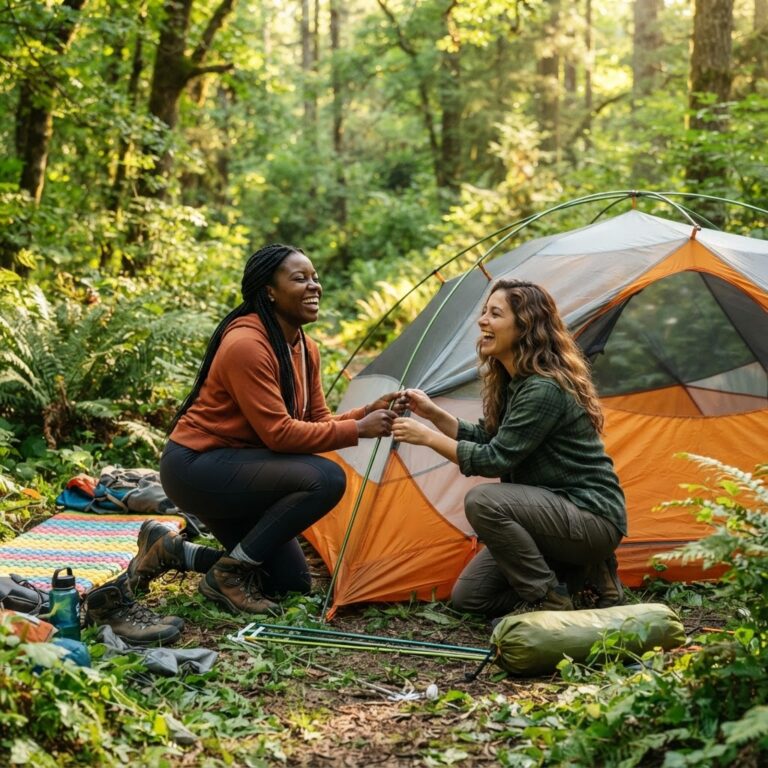
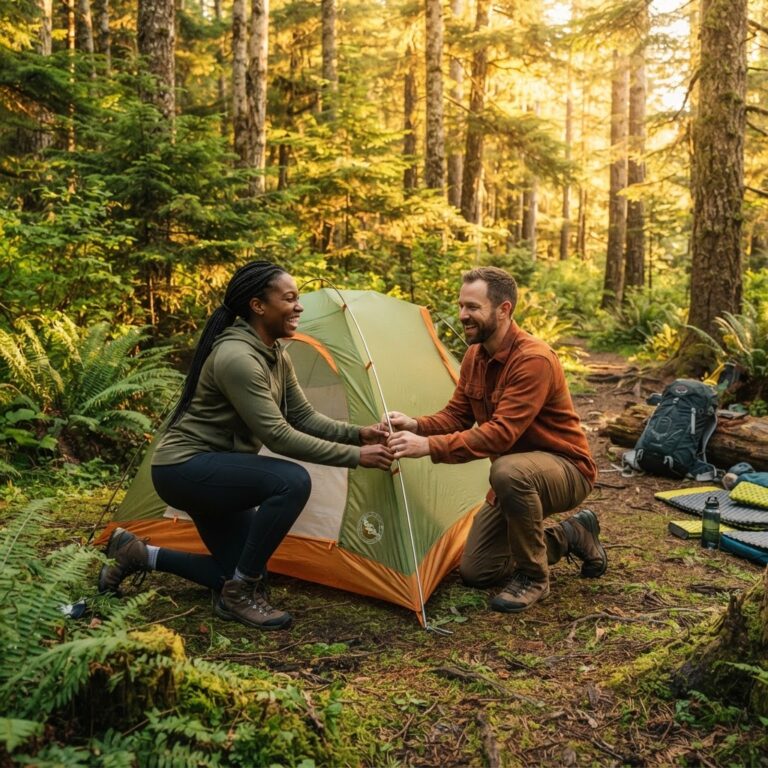
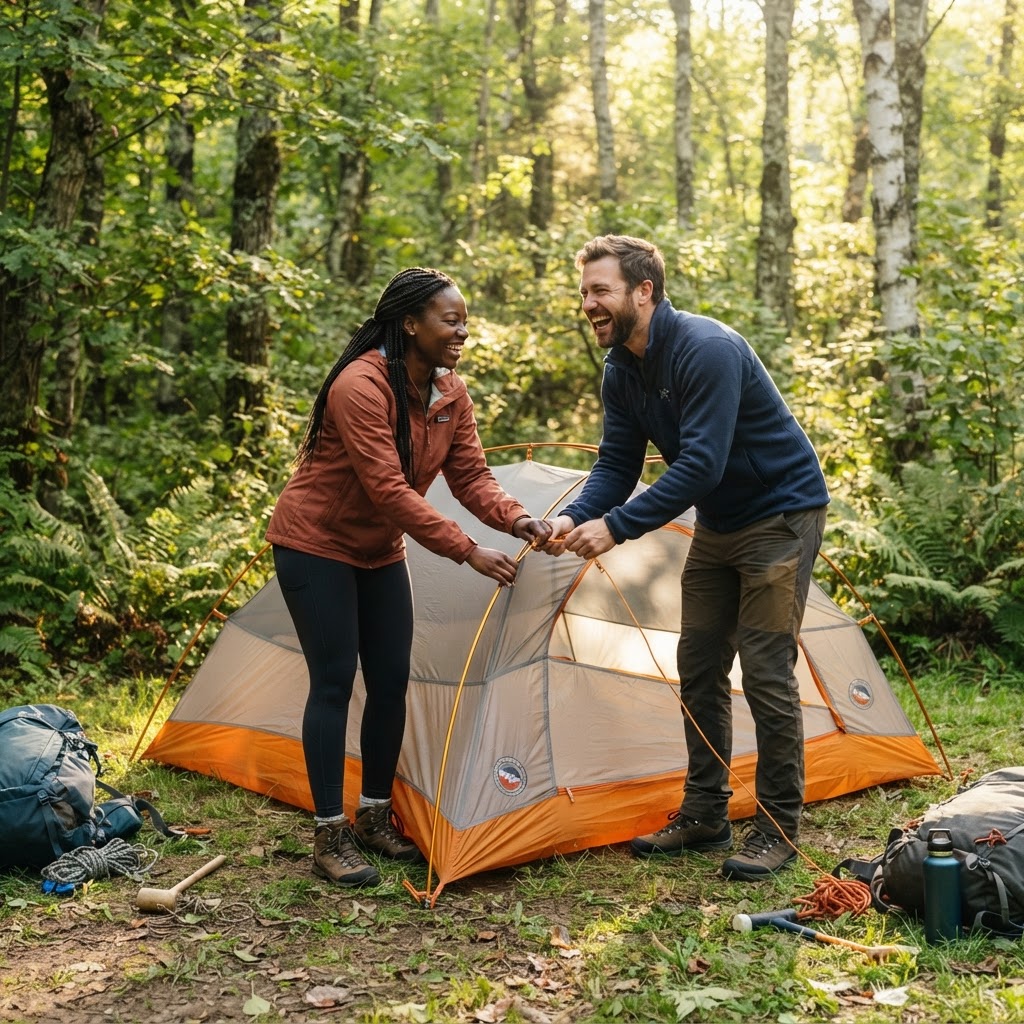
Practice makes speed. The fastest approach is to do a mock setup at home once, then repeat the key steps at the trailhead before you hike in. A reliable sequence is: lay out the footprint, assemble poles, attach poles to the tent body, raise the tent, stake corners, and finally add the rainfly and guy lines. Following the same sequence each time becomes muscle memory.
When you stake the tent, pull the fabric taut but avoid over tension. Stake at a 45 degree angle, pointing away from the tent, for the best holding power. If the ground is hard, use rocks or logs to anchor guy lines. Finally, position your sleeping bag and gear so wet items are stored away from your sleeping area. A simple interior layout rule is to keep the entrance facing the least exposed direction for wind and to park cooking areas at least 50 feet from the sleeping area when regulations and safety allow.
Mastering Campfire Safety and Cooking
Campfire skills combine safety and enjoyment. Knowing how to build a fire properly, maintain it, and cook on it will make meals more satisfying and reduce risk. This section focuses on practical fire building methods and the minimal camp cooking gear that delivers the best returns for time and weight.
Proven methods for building a campfire
First, check local rules and fire danger levels. When fires are permitted, select an existing fire ring if available, and clear a 10 foot area of flammable material. Use small kindling and tinder to start, then add progressively larger sticks. The key is airflow. Arrange fuel so air can move through, which allows the fire to breathe and prevents smoldering.
For control, always have a bucket of water and a small shovel nearby. To extinguish, drown the fire with water while stirring the ashes until everything is cold to the touch. Never bury embers, because they can smolder and reignite. Practicing safe fire techniques protects the forest and keeps your trip from becoming an emergency.
Camp cooking gear you actually need
Good camp cooking is about priorities. A lightweight stove that ignites reliably, a pot large enough to boil water for meals or coffee, a small frying pan, and a reliable utensil set is all most trips require. Add a cutting board and a small container for washing dishes. If you plan to cook for a group, scale the pot size and fuel accordingly.
Organize your cooking area to minimize cross contamination and wildlife attraction. Keep food sealed when not in use, and clean up food scraps immediately. When you are done cooking, wash dishes away from water sources with biodegradable soap, and scatter strained dishwater on durable ground. These small habits dramatically reduce wildlife interactions and follow Leave No Trace principles.
Choosing gear is about trade offs. If your trip involves long hikes, prioritize the lightweight options. If your car is nearby and comfort matters more than weight, enjoy the car camping choices. For a balanced approach, pick a few lightweight essentials and add one comfort item for morale.
Comparing Camping Gear for Different Environments, how to master essential camping skills
Not every piece of gear performs equally in every environment. Understanding the difference between lightweight backpacking gear and car camping setups, and how sleeping bag temperature ratings work, helps you prepare for the conditions you will face. This knowledge prevents cold nights and overburdened backpacks.
Lightweight backpacking vs. car camping gear
Backpacking gear is designed for weight savings and multi use. You will choose compact, multifunctional items that fold small and weigh less. Think minimal cookware, a small tent, and a sleeping system that compresses. In contrast, car camping allows space for larger tents, full cookware sets, camp chairs, and bulk food supplies. The goal of backpacking is reduced load for easier mobility. The goal of car camping is comfort and convenience.
When deciding, ask how far you will carry gear, and how much comfort you need. For marketing and affiliate audiences, this is a useful framing to highlight product benefits. If you want tips on enjoying backpacking trips, review helpful tactical advice in this article on backpacking tips, which breaks down packing and pacing for long walks into simple steps https://www.camprambler.com/10-best-tips-for-enjoying-your-next-backpacking-adventure-trips-4/.
Seasonal sleeping bag temperature ratings
Sleeping bag ratings are often shown as comfort and limit temperatures. For three season camping, a bag rated to around 20 to 30 degrees Fahrenheit will work for spring through fall in many places. For winter use, choose a bag rated much lower, and pair it with an insulated sleeping pad. Your personal tolerance to cold, what you will wear to bed, and whether you will be sleeping in shelter all change what rating you need.
Practice at home by sleeping with the bag in a cool room to test comfort. If you plan layered clothing or a liner, factor those into the rating. A good rule of thumb is to give yourself a buffer of at least 10 degrees below the expected overnight low. If you are uncertain, err on warmth, because losing heat at night is a quick path to an uncomfortable or unsafe trip.
Pro tip: Practice tent pitching, fire building, and packing at home once, then film a short how to clip on your phone. The repetition builds skill, and the footage helps you troubleshoot when you forget steps on the trail.
For focused tent camping practices, especially if you are coming from a first time perspective, this tent camping guide shares practical tips for setup and site selection that complement what you have learned here https://www.camprambler.com/10-best-tips-and-tricks-to-follow-when-tent-camping-4/.
Frequently Asked Questions
What is the best way to keep food safe from animals?
The most effective approach is to remove attractants and use secure storage. Store food in sealed containers and hang food in a bear bag away from camp when required, or use a hard sided food locker if the site provides one. Never leave food in your tent. Cook and store food at least 50 feet from your sleeping area when regulations and safety allow. Clean cooking equipment thoroughly, and pack out or properly dispose of food scraps. These steps reduce wildlife encounters and protect animals.
How do I choose the right sleeping bag for the weather?
Start with the expected overnight temperature for the season. Pick a sleeping bag with a comfort rating that is at least 10 degrees lower than that temperature for a safety buffer. Consider the insulation type, the bag shape, and whether you will use a sleeping pad or additional layers. Test the bag at home in conditions that approximate the outdoors so you understand how warm it feels with your typical camp clothing. If you are between ratings, choose the warmer bag, because being cold at night is the most common complaint among campers.
What are the most important Leave No Trace principles?
The essential Leave No Trace principles are: plan ahead so you avoid fragile areas, travel and camp on durable surfaces, properly dispose of waste including human waste when required, leave what you find and do not disturb artifacts or plants, minimize campfire impacts by using existing rings or a stove, respect wildlife by storing food securely and observing from a distance, and be considerate of other visitors by keeping noise low and sharing the space. Following these practices preserves public lands and ensures future campers enjoy the same experience.
Final Thoughts
Mastering essential camping skills is about practice, planning, and respect for the environment. Start with shelter, fire safety, food handling, and the right gear, and each trip will feel smoother and safer than the last.