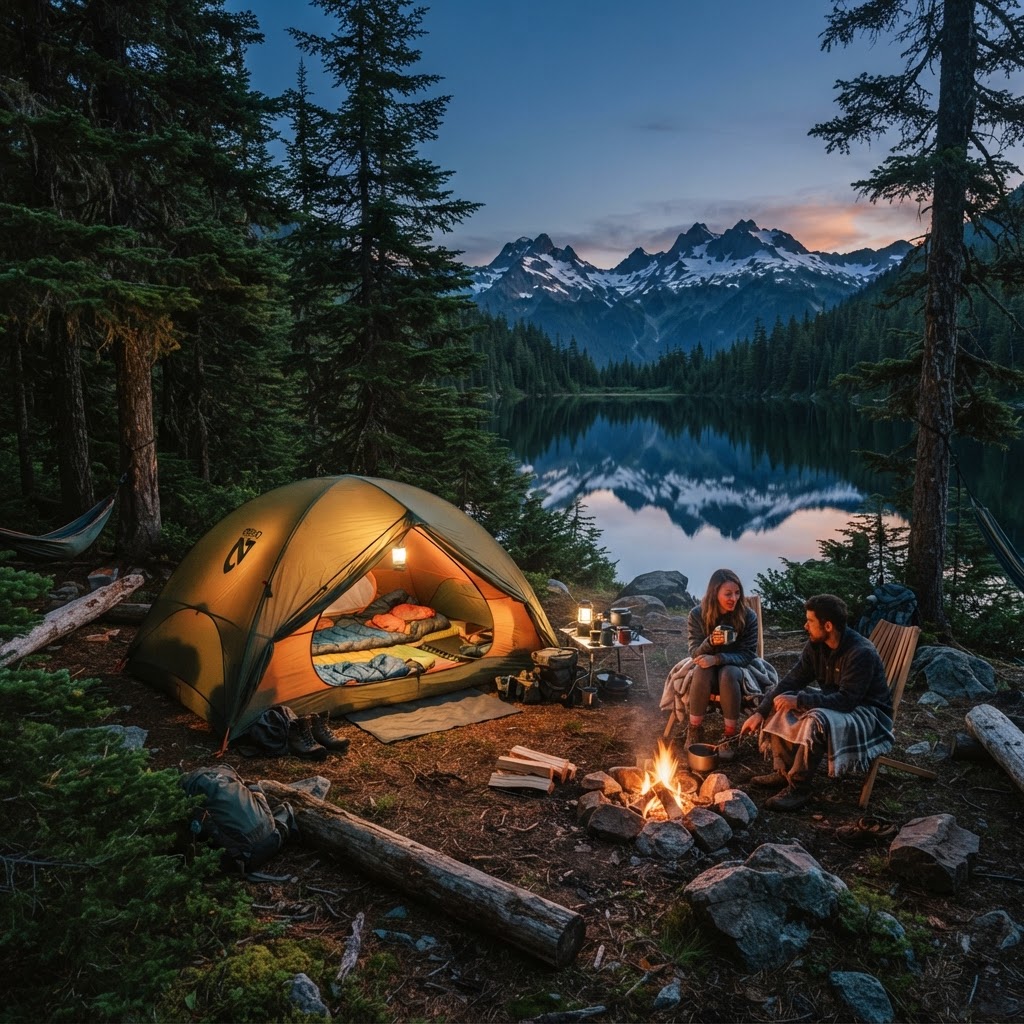

TL;DR:
- Choose a flat, sheltered spot and set up your tent with a simple routine to save time and stress.
- Build small, safe campfires and favor one-pot or Dutch oven cooking for tasty, low-fuss meals.
- Prioritize insulation, secure food from wildlife, and practice Leave No Trace to stay comfortable and responsible.
Camping is one of those rare activities that can feel both wildly adventurous and deeply relaxing. Whether you’re heading out for a weekend getaway or gearing up for a week-long backcountry trip, a few reliable skills make all the difference between a frustrating outing and an unforgettable escape.
This guide walks you through practical, actionable “How To” steps for setting up camp, managing fire and meals, and staying safe and comfortable in nature. Read on, pick up a couple of new techniques, and you’ll feel more confident the next time you unzip your tent under the stars.
Table of Contents
- How To Set Up Your Campsite Like A Pro
- How To Manage Your Campfire And Kitchen
- How To Stay Safe And Comfortable In Nature
- FAQ
How To Set Up Your Campsite Like A Pro
How To Choose The Perfect Flat Campsite
Picking the right campsite is the foundation of a smooth trip. A great spot keeps you dry, reduces tent noise (when branches move), and keeps critters and water away. Here’s how to pick smartly:
- Look for flat ground: Avoid slopes—tent mattresses and bodies will slide downhill, and you’ll wake up stiff. A gentle slope is manageable if it drains water away from you rather than toward you.
- Check for drainage: Inspect the site for hollows or channels where water might collect after rain. If you can imagine where puddles would sit, avoid it.
- Avoid low spots: Even if the ground looks dry, low areas can become marshy in heavy rain.
- Find natural wind protection: Use a stand of trees or a large boulder as a windbreak, but avoid pitching directly under dead branches (widowmakers).
- Mind vegetation and ground cover: Camp on durable surfaces like bare soil or established campsite pads when available. Avoid fragile plants and meadows.
- Keep proximity in mind: Place your tent a comfortable distance from the cooking area and latrine—100 feet (30 meters) is a good rule of thumb where feasible.
- Sun and shade: Consider the sun’s path—morning sun can warm a chilly tent, while afternoon shade will keep things cool.
Pro tip: If the ground is rocky, use a footprint or tarp under your tent and move small rocks aside—sleeping over them is a fast track to a sore back.
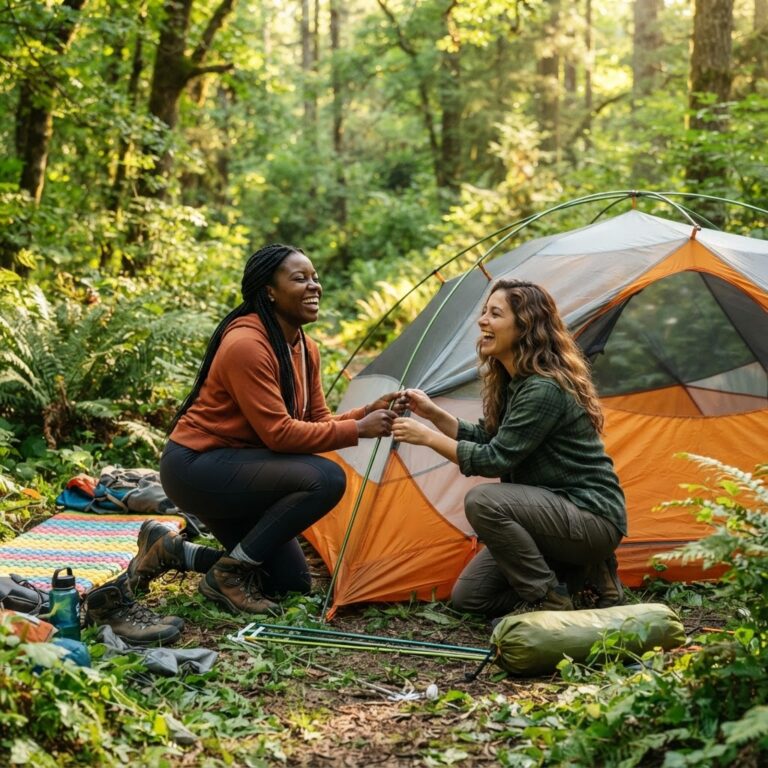
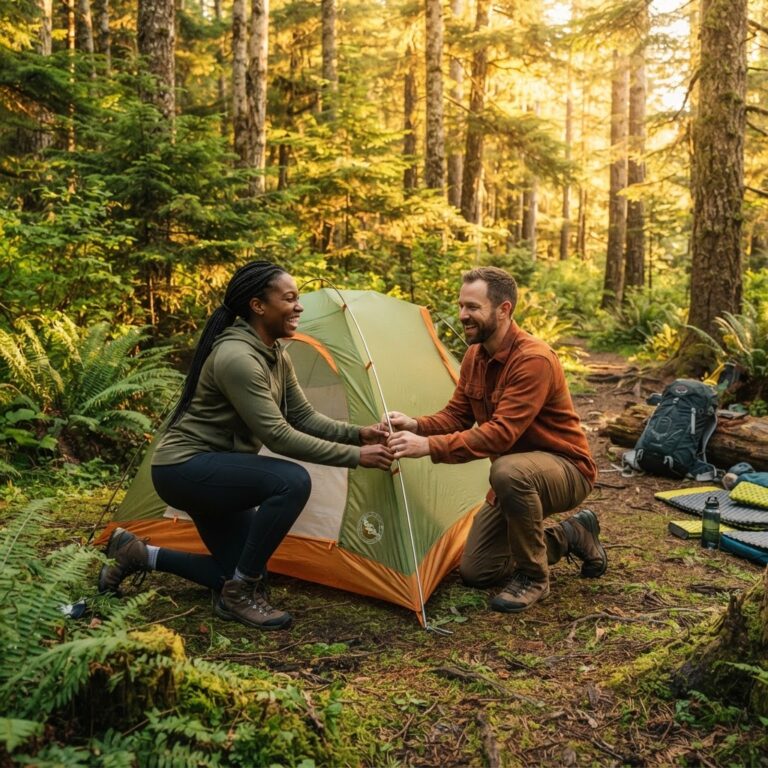
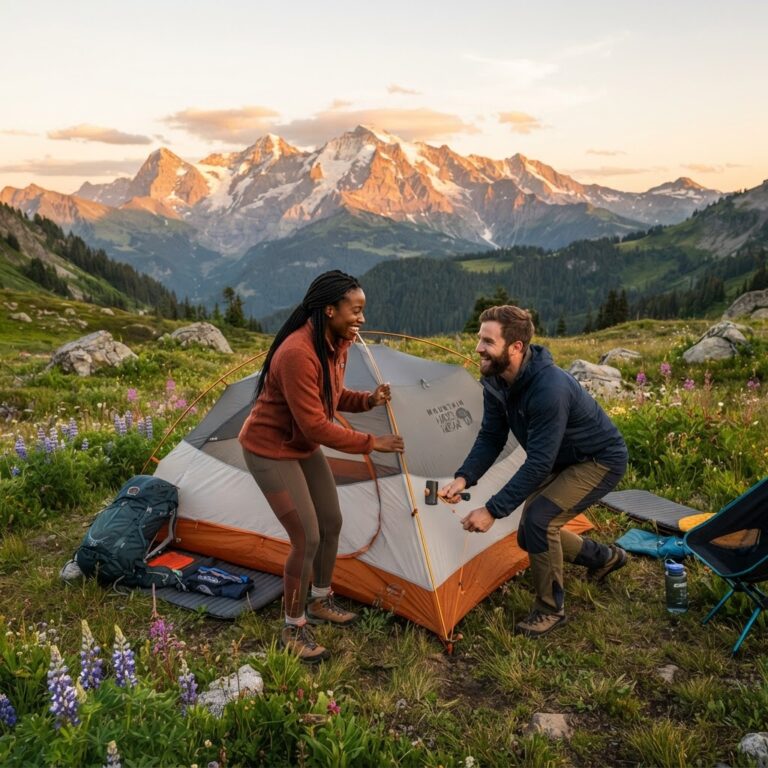
How To Pitch A Tent In Under Ten Minutes
With a system and practice, pitching a tent can be fast and nearly automatic. The goal is consistency: pack the tent the same way and set it up the same way every time.
- Pre-site checklist (1 minute): Clear debris, check for roots and rocks, and measure a palm-to-palm spread of space to ensure the tent fits.
- Layout and orientation (1–2 minutes): Unpack tent, lay footprint or tarp, and position the tent so the door faces desired view or wind direction. A footprint protects the floor and makes setup easier.
- Assemble poles (1–2 minutes): Connect pole sections fully so they click. Most modern poles are shock-corded—snap them together quickly.
- Raise tent body (2–3 minutes): Insert poles into grommets or clips per manufacturer directions. If the tent is freestanding, you can step back and let it hold shape before staking.
- Stake and guy (2 minutes): Stake corner points, then tension guy lines. On windy nights, add extra stakes and trim fabric tautness to prevent flapping.
- Practice at home: Time yourself a few times in your backyard. Muscle memory is what gets you under ten minutes.
For multi-person setups, assign roles: one handles poles, one stakes, one organizes the interior gear. Communication keeps the process under ten minutes and reduces frustration.
How To Manage Your Campfire And Kitchen
How To Build A Safe And Efficient Campfire
A good campfire is small, controlled, and efficient. It provides warmth, ambience, and cooking heat without turning into a hazard. Follow these steps for safety and performance:
- Check regulations: Always verify local fire restrictions and use designated fire rings when required.
- Choose your site: Use existing fire pits if possible. If none exist, pick a spot clear of overhanging branches, dry grass, and debris.
- Gather the right wood: Collect tinder (dry leaves, birch bark, or commercial fire starter), kindling (small sticks), and fuel wood (larger logs). Avoid wet or green wood—burns poorly and creates smoke.
- Build a small, efficient fire: Use the teepee or log cabin structure for quick ignition. A small, hot fire cooks better and uses less wood than a large, smoldering one.
- Control the flame: Keep the fire manageable—roughly a foot to two feet across for cooking and warmth. Use a shovel or water to reduce size quickly if needed.
- Always watch the fire: Never leave a flame unattended. Assign a person to be responsible for keeping it in check.
- Extinguish completely: Drown the fire with water, stir the ashes, and feel for remaining heat. If it’s still warm, add more water and stir until cool to the touch.
Efficient fires use split, seasoned wood and good airflow. Too much wood chokes the flame and creates smoke; too little makes it hard to maintain heat. Balance is the trick.
How To Cook Delicious Meals Over An Open Flame
Cooking over an open flame is an art, but it’s also about planning. Use cookware suited to your fire style and keep meals simple, flavorful, and low-fuss.
- Choose fuel-friendly meals: One-pot stews, foil packets, skewers, and Dutch oven breads are reliable. They minimize cleanup and concentrate flavor.
- Use the right gear: A lightweight pot or pan, a kettle, a sturdy spatula, and a pair of tongs go a long way. For campfire cooking, consider a cast-iron Dutch oven for slow braises and bread.
- Master heat zones: Move coals aside to create a hot zone and a medium zone. Direct flame is good for searing; coals are better for simmering and baking.
- Foil packet technique: Wrap seasoned veggies, potatoes, or fish in heavy-duty foil, seal tightly, and bury in coals for 15–30 minutes depending on contents. Great for hands-off cooking.
- Simple marinade/sauce hacks: A zip-top bag with olive oil, salt, pepper, and a squeeze of lemon juice can transform any protein. Add fresh herbs and garlic when available.
- Timing and prep: Pre-chop veggies and precook dense items (like root veggies) if possible. Mise en place at camp saves time and keeps cooklines moving smoothly.
Here’s a quick, crowd-pleasing recipe: Dutch oven chili. Brown ground meat over coals, add onion, canned tomatoes, beans, chili powder, and simmer for 30–45 minutes. Serve with cheese and cornbread.
How To Stay Safe And Comfortable In Nature
How To Stay Warm During Cold Nights
Cold nights can turn a great trip into a miserable one fast. The key is layering, insulation from the ground, and managing moisture.
- Layer clothing smartly: Base layer (moisture-wicking), insulating mid-layer (fleece or down), and an outer shell (windproof/waterproof) work together. Avoid cotton next to skin; it traps moisture.
- Choose the right sleeping bag: Look for temperature ratings slightly colder than the expected low. Down bags pack small and insulate well; synthetic fills perform better when damp.
- Use a sleeping pad for insulation: R-value measures insulation—backcountry pads usually have R-values between 2 and 5; colder nights call for R 4+. Combine foam and inflatable pads for extra warmth.
- Pre-warm your sleeping bag: Heat a water bottle (securely capped) and place it near your feet. Don’t use hot coals or open flames; use only sealed containers.
- Keep dry: Change into dry clothes before bed, and store damp items outside the sleeping area. Wet clothing steals heat quickly.
- Sleep clothing and hat: Wear a warm hat and dry socks—significant heat loss occurs from your head and feet.
Small adjustments—like a thicker pad or a hat at night—often produce the biggest comfort gains.
How To Keep Your Food Safe From Wildlife
Protecting your food is about making it inconvenient for wildlife to access it. Different environments call for different strategies—what works for raccoons won’t always work for bears.
- Know local guidelines: Many parks mandate bear canisters or lockers. Learn rules before you go and plan gear accordingly.
- Use secure storage: Store food in a hard-sided bear canister, food locker, or your vehicle when available. Keep scented items (toothpaste, sunscreen, pet food) with food storage.
- Bear hang technique: If canisters aren’t required and hanging is allowed, use the counterbalance or PCT hang method: suspend food at least 10–12 feet high and 4–6 feet away from tree trunks or branches.
- Cook away from sleeping area: Set up a cooking area at least 100 feet (30 meters) from tents. This reduces attraction to sleeping areas.
- Clean up thoroughly: Pack out food scraps, wash dishes, and dispose of wastewater properly (scatter or pack out depending on local rules). Residual smells attract animals.
- Use odor-proof bags: For extra security, place food in odor-proof sacks before storing in a canister or vehicle.
Use this table to match gear choices to your style. If you’re new, start with a budget setup and upgrade pieces that you find limiting—sleep system and rain protection are usually the first to prioritize.
Frequently Asked Questions
How to pack a camping backpack efficiently?
Packing efficiently saves your back and reduces time setting up. Start by placing heavy, dense items close to your spine and centered: tent, stove, and food in bear-safe containers. Keep medium-weight items (clothing, sleeping bag) lower and towards the middle or bottom if you’re using a frame pack. Light items like sleeping pad, jacket, and toiletries can go on the outside or in top pockets. Use compression sacks to reduce volume. Keep essentials—headlamp, first-aid, map, rain jacket—accessible in top lid or hip-belt pockets. Balance weight left-to-right and tighten hip belt so the pack rests on your hips, not your shoulders.
How to treat water for drinking while camping?
Treating water depends on source quality and desired convenience. Boiling is the most reliable: bring water to a rolling boil for 1 minute (or 3 minutes above 6,500 feet/2,000 meters). Chemical treatments (iodine or chlorine dioxide tablets) are lightweight—follow package directions and allow sufficient contact time. Filters remove protozoa and bacteria; some advanced filters or purifiers remove viruses as well or combine with a chemical treatment. UV purifiers (battery-powered) are quick and effective in clear water. Always filter cloudy water first or pre-settle it. Carry a backup method in case one fails.
How to leave no trace in the wilderness?
Leave No Trace principles help protect wild places. Key practices include: plan ahead (know rules and pack out what you pack in), camp on durable surfaces, dispose of waste properly (pack out toilet paper and human waste where required, or dig catholes 6–8 inches deep at least 200 feet from water), leave natural objects and cultural artifacts untouched, minimize campfire impacts (use established rings or a camp stove when appropriate), respect wildlife (store food securely and observe at distance), and be considerate of other visitors. Small, consistent choices by all campers keep trails, lakes, and forests healthy for generations.
Final Thoughts
Mastering camping is about learning a few reliable routines—site selection, quick tent pitching, safe firecraft, efficient cooking, and smart wildlife precautions. Practice these skills, adapt them to your environment, and you’ll not only be more comfortable, you’ll help protect the places you love. Most importantly, enjoy the simplicity: the stars, the quiet, and the sense that you can thrive outdoors with just the essentials and a little know-how.