
TL;DR:
- Arizona offers dramatic camping variety, from cool pines in the Coconino National Forest to red rock campsites near Sedona and backcountry options on Bureau of Land Management land.
- The best campgrounds in Arizona include classic national park sites, state parks with amenities, and remote primitive areas for self sufficient campers and RV travelers alike.
- Book popular sites early for spring and fall, pack for temperature swings, and consider free BLM sites for a quiet, budget friendly experience.
Arizona is a state of dramatic contrasts, where you can wake up in a chilly pine forest and be exploring sun baked slot canyons by lunch. Whether you are a seasoned RVer or a tent pitching minimalist, finding that perfect patch of dirt can be overwhelming, so let us narrow down your options to the absolute best spots.
Below I walk you through northern high country alpine escapes, central red rock deserts, and practical comparisons to match your camping style. I include trusted parks like Grand Canyon National Park, the forested havens of Coconino National Forest, Sedona red rocks, Bureau of Land Management land options, and Arizona State Parks so you can plan a trip that fits your pace and gear.
Table of Contents
- Finding Your Oasis: Northern Arizona’s High Country
- Red Rocks and Desert Wonders: Central Arizona
- Quick Comparison: Choosing Your Arizona Campsite
- Frequently Asked Questions
- Final Thoughts
Finding Your Oasis: Northern Arizona’s High Country, best campgrounds in Arizona
Northern Arizona is where you go to escape the heat and sleep among pines, aspen groves, and high desert meadows. Elevations around Flagstaff and the Grand Canyon create cooler nights, fragrant forests, and miles of trails. If you want to prioritize shade, abundant water, and large trees, this region is your first stop when looking for the best campgrounds in Arizona.
Alpine escapes in the Coconino National Forest
Coconino National Forest wraps around Flagstaff and Sedona, offering an incredible range of campsites from developed campgrounds to dispersed sites. For classic alpine camping consider sites near the Arizona Snowbowl corridor and along Oak Creek Canyon. Mormon Lake Campground, nestled among open meadows, gives you big sky views and easy access to hiking.
For tent campers who love a ceiling of stars and short hikes to creeks, Cave Springs Campground, located in a cool riparian canyon, is a favorite. If you are traveling by RV, many forest campgrounds in the area have level pads and hookups in nearby state parks, while more primitive sites give you the solitude of Bureau of Land Management land without the crowds.
Camping under the stars at the Grand Canyon
Grand Canyon National Park offers an iconic camping experience. Mather Campground on the South Rim is the most accessible, with roomy sites, easy Rim Trail access, and great views at sunrise. Book ahead during spring and fall because this remains one of the top destinations for campers from across the country.
If you want a deeper backcountry experience consider the North Rim or reserve a permit to camp below the rim. The North Rim is quieter, cooler, and feels remote, but it is only open part of the year. Camping at the rim is perfect for families who want spectacular views without long hikes, while backcountry permits unlock the Colorado River and inner canyon solitude for experienced campers and backpackers.
Red Rocks and Desert Wonders: Central Arizona
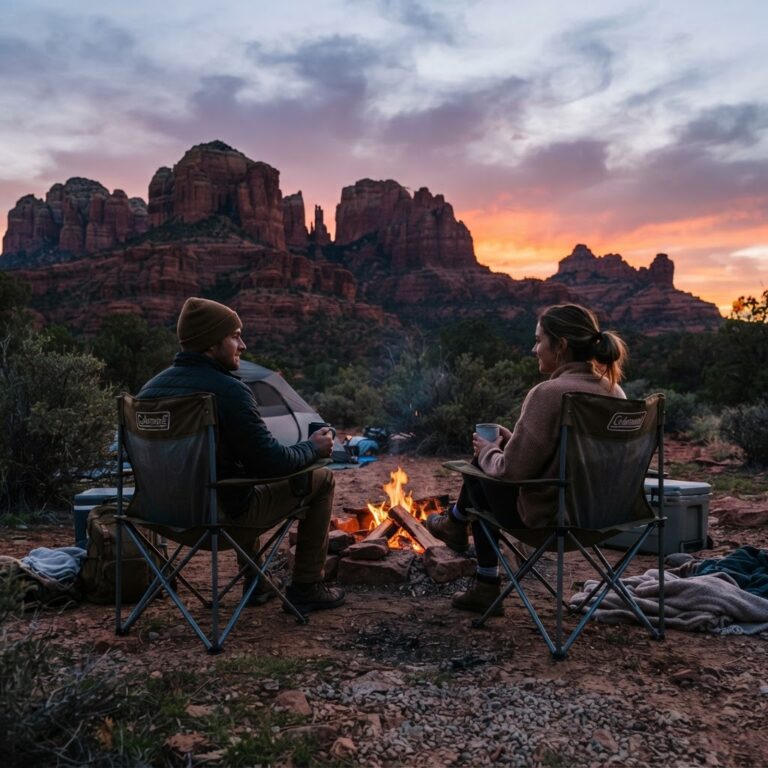
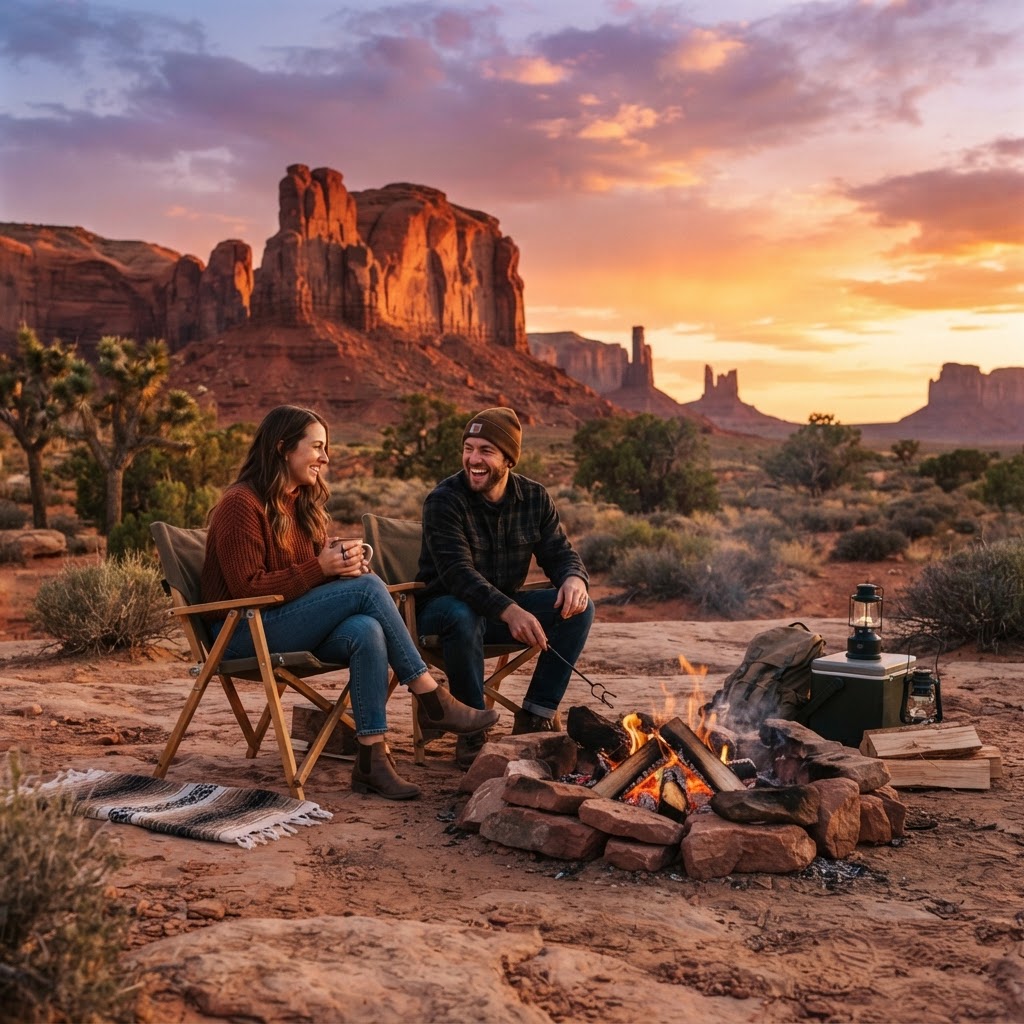
Central Arizona defines the visual identity many people imagine when they think of the state: red rock cliffs, winding creeks, and cactus dotted mesas. This zone includes Sedona and the Verde Valley, where campsites often sit in stunning geological settings that feel cinematic at sunrise and sunset.
Sedona’s iconic red rock campsites
Sedona is famous for campsites that tuck into ponderosa forests with towering red stone above. Cave Springs Campground sits in Oak Creek Canyon and combines quick access to swimming holes with shaded tent sites. For RV travelers there are campgrounds that balance convenience and views, giving you hookups close to world class trails and scenic drives.
When you camp near the Sedona red rocks, plan for dramatic temperature swings. Nights are cool, days can be warm, and storms can roll through fast. If you are new to desert camping, read practical tent camping tips to manage temperatures and camp setup, including where to pitch and how to protect your tent from sudden weather.
Ten Best Tips and Tricks to Follow When Tent Camping has useful advice that pairs perfectly with a Sedona trip, especially for first time tent campers who will be dealing with both wooded shade and sunny trails.
Hidden gems near the Verde Valley
The Verde Valley, anchored by Cottonwood and Camp Verde, offers state parks and lesser known sites along the Verde River. Dead Horse Ranch State Park gives you green river corridors and defined loops for tent and RV camping with amenities. Nearby Tuzigoot National Monument and historic towns make for relaxed day trips between hikes and happy hour by the campfire.
If you want quieter, more primitive spots, explore the Bureau of Land Management land and national forest boundaries that surround the valley. BLM land often provides free dispersed camping, with no amenities but lots of privacy, and it is perfect for folks who want to set up camp away from established loops. When searching for solitude remember to follow Leave No Trace principles and pack out everything you bring in.
Quick Comparison: Choosing Your Arizona Campsite
Choosing among top rated campgrounds in Arizona comes down to three core questions, what level of amenity do you want, how close do you want to be to major attractions, and do you prefer quiet, dispersed BLM land or a busy, full service RV park. Below is a practical breakdown to help match your style to the right campground.
Luxury RV resorts versus primitive sites
If you travel in an RV and like hookups, paved pads, and on site amenities, look for top rated RV parks in Arizona near larger towns or state park campgrounds. These sites make long stays easy and have services like dump stations and potable water. By contrast, primitive campgrounds and dispersed BLM land offer wide open sky, no reservations in many cases, and the kind of star filled nights that hook up lovers rarely see.
Decide whether you want convenience or solitude. For convenience, choose developed campgrounds in Arizona State Parks or private RV resorts. For solitude, pick dispersed sites in national forest boundaries or BLM land, and be ready to be self sufficient.
Seasonal considerations for Arizona desert camping
Timing is everything in Arizona. Spring and fall bring perfect temperatures for the desert, while summers can be brutal at lower elevations and winters can be snowy in the high country. Plan northern alpine trips during summer if you want cooler temperatures. For Red Rock country choose spring or fall for hiking and comfortable nights.
For those seeking backcountry or multi day backpacking adventures, consult expert packing and safety advice before heading out. The following backpacking tips guide covers essential items and route planning that will keep multi day trips safer and more enjoyable.
Ten Best Tips for Enjoying Your Next Backpacking Adventure Trips is a solid companion for anyone planning an overnight canyon or ridge route in Arizona.
Pro tip: If you want the quietest nights, arrive on weekdays, avoid holiday weekends, and consider BLM land outside of developed campgrounds. Bring a solar lamp, plenty of water, and a small shovel for cathole waste when staying dispersed.
Frequently Asked Questions
What is the best time of year to go camping in Arizona?
The best time to camp in Arizona depends on elevation. For lower desert areas and red rock country, spring and fall offer the most comfortable temperatures. For northern high country near Flagstaff and Grand Canyon National Park, summer gives cooler days and nights, making alpine camping ideal. Winters can be snowy at higher elevations but pleasant at lower desert parks. Always check local weather and trail conditions before you go.
Do I need a reservation for popular campgrounds in Arizona?
Yes, many popular campgrounds, especially those in Grand Canyon National Park and Arizona State Parks, require reservations during peak season. Reserve as far in advance as possible for spring and fall. Some national forest campgrounds allow same day or walk in camping, while dispersed Bureau of Land Management land typically does not require a reservation but follows first come, first served rules.
Are there free camping options available in Arizona?
Yes, Arizona has abundant free camping, mostly on Bureau of Land Management land and in national forest dispersed sites. These areas have few or no amenities, and campers must be self contained. State parks and national parks generally charge fees and require reservations for developed sites, but free BLM locations are an excellent option for budget travelers seeking solitude. Remember to follow all local regulations and practice Leave No Trace.
Final Thoughts
From cooling pines in the Coconino National Forest to the iconic cliffs at the Grand Canyon, Arizona offers a campsite for every style. Pick your season, decide between amenities and solitude, and you will find a spot that turns your trip into an unforgettable outdoor adventure.