
TL;DR:
- Plan conservatively: pick an easy, well-traveled route, check high-altitude weather, and leave your itinerary with someone you trust.
- Bring reliable navigation and emergency gear (map, compass, PLB/satellite messenger), a three-season tent and a warm sleep system, plus lightweight repair and first-aid supplies.
- Prioritize safety and mental wellbeing: learn wildlife protocols, practice route-finding, and use small rituals and routines to manage solitude and stay confident on the trail.
Solo camping in the mountains is one of the most rewarding ways to connect with nature and yourself. The fresh air, wide-open views, and quiet nights under the stars can feel like an immersion therapy session for the modern mind. But mountains also demand respect: changing weather, steep terrain, and wildlife require planning and the right gear.
This guide is written to be friendly and practical: whether you’re preparing for your first overnight or your first multi-day solo trip in higher terrain, you’ll find step-by-step planning advice, gear recommendations, safety strategies, and simple mental tools to enjoy solitude rather than fear it.
Table of Contents
- Planning Your First Solo Mountain Getaway
- Essential Gear for Solo Wilderness Camping
- Safety and Mental Wellbeing on the Trail
- FAQ
Planning Your First Solo Mountain Getaway
Choosing a beginner-friendly trail
Choosing the right trail is the most important decision you’ll make. For your first solo mountain trip, aim for a route that is:
- Well-marked and frequently used — more traffic means clearer paths, common knowledge of hazards, and a greater chance others will be nearby if you need help.
- Within your physical limits — pick a distance and elevation gain you can comfortably hike in a day with a loaded pack. Hot tip: add 25–30% time for breaks and slower pace with a pack.
- Close to a trailhead with cellular coverage, at least initially — this simplifies emergencies and check-in plans.
- Free of technical sections — avoid exposed scrambling, glacier travel, steep snowfields, and loose scree on your first solo trip.
How to find these trails: check local guidebooks, national park websites, and recent trip reports on apps or forums. If you can, visit the trailhead beforehand for a short reconnaissance hike or talk to rangers and other hikers about current conditions.
Plan a conservative itinerary. Establish realistic daily targets, build in extra time for weather or route-finding, and choose a camp spot that is sheltered, level, and a safe distance from water sources (to minimize wildlife contact and flooding risk).
Understanding weather patterns in high altitudes
Weather in the mountains can change fast, and altitude amplifies those changes. A warm morning can flip to a cold, windy afternoon storm. Here are mountain-specific weather concepts to internalize:
- Diurnal cycles: Mountain weather tends to be calmer in the morning and more active in the afternoon due to solar heating and convection. Aim to summit or cross passes early in the day.
- Temperature swings: Expect large day-to-night temperature differences. Layering and a warm sleep system are essential.
- Wind and exposure: High ridgelines and saddles amplify wind; plan camps in sheltered areas below ridgelines. Wind chill can make temperatures feel much colder than the thermometer reads.
- Thunderstorms and lightning: These are common in summer afternoons in many ranges. If thunderstorms are forecast, avoid exposed ridges and postpone summit attempts.
- Microclimates: Weather varies dramatically with orientation and terrain. South-facing slopes might be dry while shaded basins hold snow and ice late into the season.
Check weather forecasts from multiple sources: national meteorological services, mountain-specific forecasts, and recent trip reports. Interpret models conservatively: a 20% chance of afternoon storms in the forecast means plan for storms as if they will happen. Always have contingency campsites and escape routes saved in your notes.
Essential Gear for Solo Wilderness Camping
Must-have navigation and emergency tools
When you’re alone, your navigation and emergency systems are your lifelines. Invest in redundancy: at least two independent ways to know where you are and how to get help.
- Map and compass: The most reliable navigation tools. Learn to read topographic maps and practice compass navigation before you go. Carry a waterproof map case and know how to orient the map to the terrain.
- GPS device: A dedicated handheld GPS or an outdoor watch with GPS is valuable for route-finding and breadcrumbing. Keep it charged and use it as a supplement, not a replacement for map-and-compass skills.
- Smartphone with offline maps: Pre-download maps and waypoints. Reduce battery drain by using airplane mode and a power-management plan.
- Personal Locator Beacon (PLB) or satellite messenger: These devices allow you to send an SOS and, in the case of satellite messengers, communicate text updates. They provide peace of mind and can be life-saving in serious emergencies.
- Headlamp with spare batteries: Use a headlamp for hands-free light and bring spares. LED headlamps are bright and efficient—carry at least two light sources for camping alone.
- First aid kit: Customize a kit for expected injuries (blisters, sprains, cuts) and include items to treat hypothermia and stabilize fractures. Take a wilderness first aid course if possible.
- Repair kit and multi-tool: Duct tape, cord, spare tent stakes, and a small kit for stove and sleeping pad repairs can keep a bad day from becoming an evacuation.
- Firestarter: Waterproof matches, lighter, and tinder. Fire may not always be allowed, but a reliable method to start a fire can be crucial for warmth and signaling in emergencies.
Practice using every device at home and on shorter trips. Familiarity reduces stress and speeds up problem-solving when things go wrong.
Choosing the right tent and sleep system
Your tent and sleep system determine how well you rest and recover. For solo mountain camping, focus on durability, weather protection, and a comfortable sleep temperature margin.
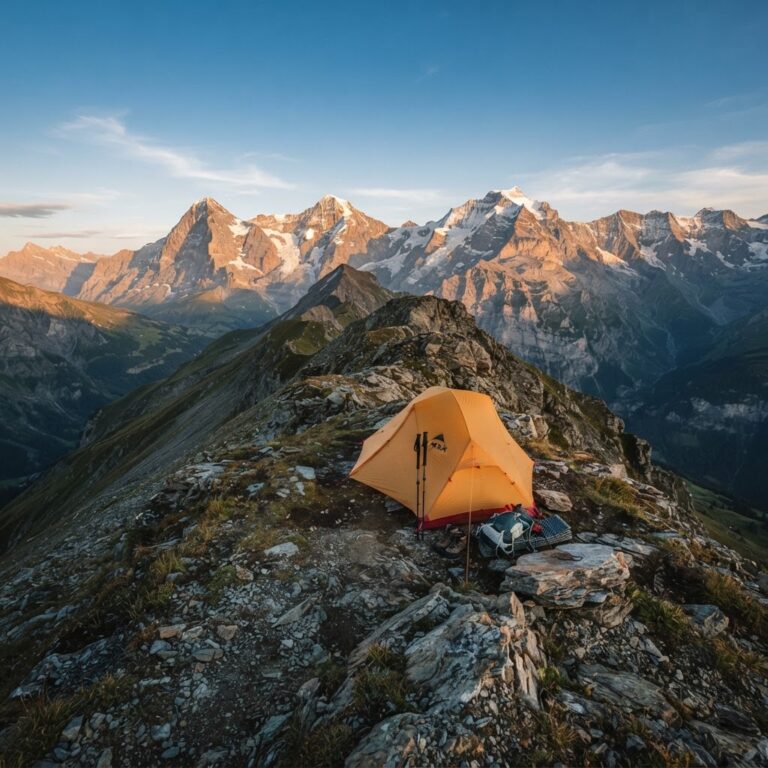
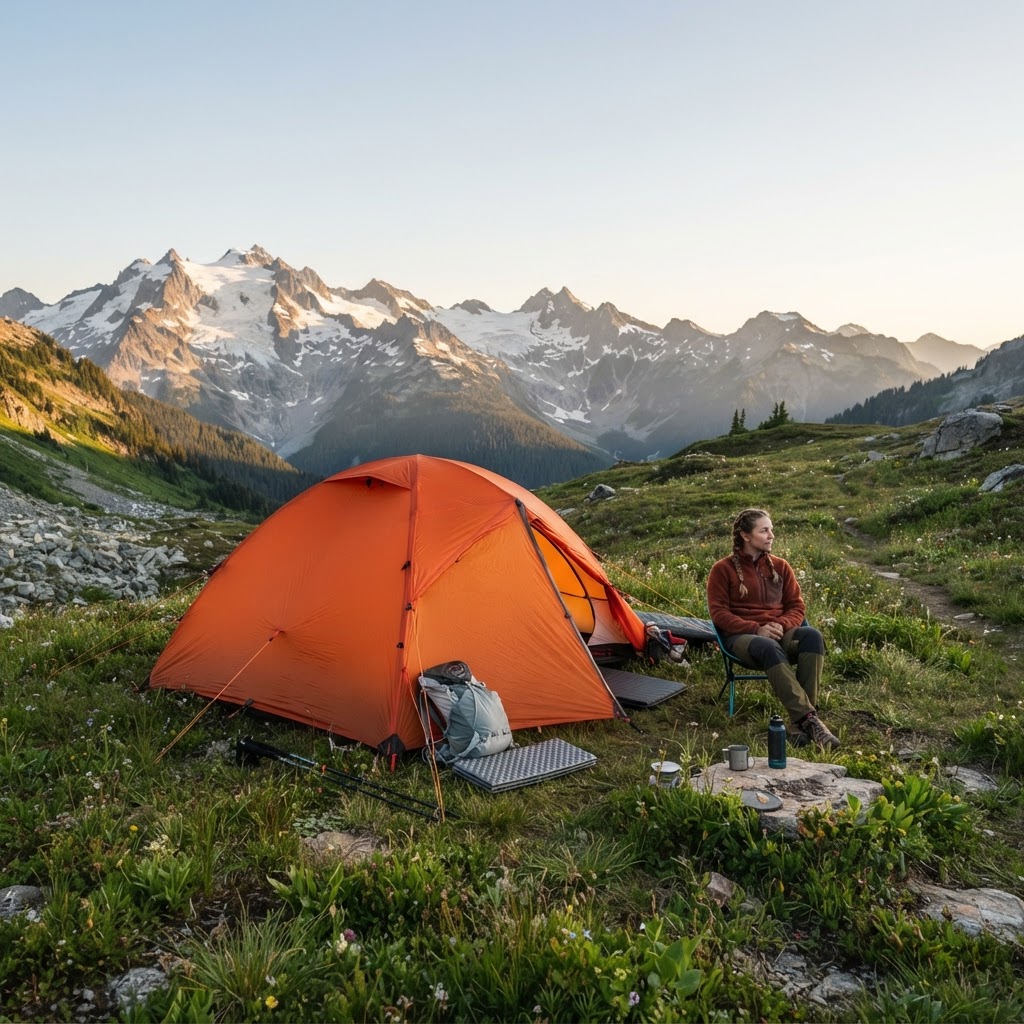
- Tent: A three-season tent is the typical choice for most mountain trips. Look for a model with a sturdy pole structure, a full rainfly, and a reasonable vestibule for gear storage. For high-wind areas choose a low-profile, aerodynamic tent or one with strong guyout points.
- Weight vs. comfort: Ultralight tents reduce pack weight but may trade durability and interior space. For your first solo mountain nights, prioritize a tent that’s easy to pitch, stable in wind, and has enough room for you and your gear.
- Sleeping bag: Pick a bag rated for temperatures lower than you expect (a comfort rating at least 10°F/5–7°C below anticipated low temps provides margin). Down provides excellent warmth-to-weight but needs to stay dry; synthetic retains warmth when damp.
- Sleeping pad: Choose an insulated inflatable pad or foam closed-cell pad with an R-value appropriate for expected ground temperatures. Ground-cold is a major source of overnight heat loss.
- Pillow and comfort items: A small inflatable pillow or a stuff sack filled with clothes improves sleep quality. Good sleep equals better decision-making on the trail.
Set up your tent and sleep system at home to ensure everything fits and you know how to use it. Invest time in organizing your pack so nighttime routines are quick—this is especially important when you’re alone and tired after a day of hiking.
Safety and Mental Wellbeing on the Trail
Staying safe with wildlife and terrain
Respect for wildlife and terrain awareness are core to staying safe. Animals are unpredictable, and terrain hazards are often subtle until you encounter them. Follow these principles:
- Food storage: Use bear canisters or hang food where required and recommended. Keep food preparation and storage at least 100 yards/meters from your sleeping area when possible.
- Smell management: Store toiletries and trash with your food or in bear-proof containers. Avoid strong-smelling food items in your tent.
- Wildlife encounters: If you see a large animal, give it space. Make noise to avoid surprising animals while hiking, especially in low-visibility areas. Learn species-specific advice—bears, cougars, and moose each require different responses.
- Terrain strategy: Tip-toe across scree and talus; avoid steep, loose slopes. In snow or ice, your first solo mountain trips should avoid technical travel unless you have formal training and the right equipment.
- Water hazards and weather: Stay clear of fast-flowing rivers; plan water crossings at shallow, wide points with secure entry and exit. Seek lower ground if severe storms or lightning approach.
One of the best safety investments is training: take basic navigation, wilderness first aid, and bear-safety classes where available. Practice moving confidently on varied terrain in daylight before you rely on those skills at night or in bad weather.
Before heading out, familiarize yourself with the expected wildlife in the area and the proper response for each. If you encounter a dangerous animal or a hazardous situation, your response should focus on de-escalation and escape options — back away slowly, avoid turning your back and running in most cases, and use loud noise or deterrents only as a last resort when you cannot create distance.
“Preparation is the quiet hero of enjoyable adventures. The more you prepare, the more freedom you have to explore, and the less fear you carry.” — Adapted advice for solo adventurers
Tips for overcoming the fear of solitude
Solitude can feel intimidating at first. Many solo campers report an initial sense of anxiety that eases as routines form and confidence grows. Use these practical and psychological strategies to turn solitude into an asset rather than a burden.
- Start small: Begin with short solo overnight trips close to home. Gradually increase distance, elevation, and nights as your comfort grows.
- Create rituals: Simple routines—set up camp the same way every time, brew a hot drink, journal—anchor your day and provide comfort.
- Bring comfort items: A favorite snack, a small book, a playlist, or a scent like a dryer sheet tucked in your pillow can make nights feel cozy and familiar.
- Practice mindfulness and breathing: Use breathing techniques to reduce anxiety. Mindfulness helps you observe intrusive thoughts without getting swept up in them.
- Set achievable goals: Give yourself small wins each day: a successful campsite setup, a timed day-hike, or a new navigation skill practiced on-trail.
- Stay connected in a limited way: Use a satellite messenger or scheduled check-ins to reassure both you and those who care about you. But balance this with intentional offline time to immerse yourself fully in nature.
- Keep a simple safety plan: Knowing exactly what to do in a few likely scenarios reduces fear. For example: if you get lost, stop, stay put, use your whistle three times, and attempt to reorient using the map and compass.
Solitude often reveals a deep appreciation for the small things: the sound of wind in trees, the patterns of cloud light, the way a campsite feels at dawn. The key is predictable structure and practiced skills—these produce calm, and calm produces the clear thinking that makes solo trips truly enjoyable.
Frequently Asked Questions
Is solo camping in the mountains safe for beginners?
Yes, solo mountain camping can be safe for beginners if you take conservative steps: choose an easy, well-traveled route; stay within your fitness and navigation limits; inform someone about your itinerary; and bring essential safety gear such as a map and compass, headlamp, first-aid kit, and a PLB or satellite messenger. Start with short overnight trips close to help and gradually build experience. Training in basic navigation and wilderness first aid significantly increases your safety margin.
What is the best way to handle wildlife encounters while camping alone?
Prevention is the best strategy: store food properly (bear canisters or hang method where allowed), keep a clean campsite, and avoid cooking near your tent. If you encounter wildlife, remain calm, give the animal space, and try not to surprise it. For bears, speak calmly, back away slowly, and never run; for moose, move away quickly if they become aggressive; for mountain lions, make yourself large and hold ground while making noise. Learn species-specific advice for the area you’re visiting and carry repellents like bear spray if appropriate for the local species.
How do I keep my itinerary secure while I am offline?
Leave your detailed itinerary with a trusted contact and a ranger station if you’re in a managed area. The itinerary should include your planned route, daily stopping points, vehicle description and location, expected check-in times, and your return time. Use a satellite messenger to send periodic check-ins or an automated schedule so someone knows you’re okay. If you prefer privacy, you can provide a minimal itinerary and a time-stamped “concern if not home by” date—this ensures someone will raise the alarm if necessary without publishing your every move.
Final Thoughts
Solo camping in the mountains offers a unique mix of challenge and tranquility. With thoughtful planning, the right gear, and a few practiced skills, you can transform nervousness into confidence and experience deeply restorative time outdoors. Respect the mountain’s rules—weather, wildlife, and terrain—and learn how to adapt. Start small, build experience deliberately, and remember that preparation is the bridge between a good trip and a great one. Your next solo night under the stars is only a few careful steps away.