

TL;DR:
- For camping in Indiana, use firewood purchased near your campsite and follow the campground’s current rules. Moving untreated wood can spread insects and tree diseases.
- Build a small, controlled fire in an established fire ring, using dry tinder, pencil sized kindling, and larger fuel added gradually.
- Stay with the fire, keep water close, and extinguish it until the ashes and coals are cold to the touch before leaving or going to sleep.
There is nothing quite like the crackle of a campfire after a long day of hiking through Hoosier forests. But getting that pleasant glow without creating a hazard takes more than a match and a pile of wood. A good fire depends on dry fuel, the right structure, attention to wind and weather, and a careful finish.
This guide to camping in Indiana explains how to prepare firewood, choose a campfire structure for warmth or cooking, and follow practical fire safety habits. Rules can vary by property and conditions, so check with your campground or the Indiana Department of Natural Resources before lighting a fire.
Table of Contents
- Sourcing And Preparing Your Firewood
- Choosing The Right Fire Structure For Your Needs
- Campfire Safety And Maintenance Comparison
- Frequently Asked Questions
- Final Thoughts
Sourcing And Preparing Your Firewood
The safest place to start is with wood you are allowed to burn, already near the campsite, and dry enough to catch. Before collecting anything, confirm the property’s rules. Some Indiana campgrounds prohibit gathering wood, even when it is already on the ground. Others require visitors to use designated fire rings or purchase wood from an approved nearby source. When in doubt, ask park staff rather than assuming fallen branches are free to take.
Why You Must Buy Wood Near Your Campsite
Buying firewood close to where you plan to burn it is a straightforward way to protect Indiana’s forests. Firewood can carry insects and diseases in or beneath its bark. Moving it over long distances may help invasive pests reach trees that have not yet been affected. A bundle sold near the campground is less likely to transport those threats far from their source.
Check local guidance before leaving home, too. Restrictions can apply to transporting firewood across county or state lines, especially when pest quarantines are in effect. The Indiana Department of Natural Resources and campground operators can provide current information. If you are visiting several states, the same principle applies elsewhere: follow local wood transport rules, just as you would plan for the different conditions covered in this guide to camping in Illinois and exploring prairie country.
Do not break branches from standing trees, living or dead. They provide habitat and nutrients, and dead branches can be difficult to identify as safe fuel. Even a fallen limb may be reserved for wildlife or protected by park rules. Bring only what the campground permits, and burn it in the designated area rather than creating a new fire site.
Identifying Dry Tinder And Kindling In The Forest
A campfire needs three basic sizes of fuel. Tinder is the smallest and catches first. Dry grass, fine bark, or thin wood shavings can work when collection is allowed and the material is genuinely dry. Kindling consists of small twigs, often no thicker than a pencil. Larger sticks and split pieces become the main fuel once the flame is established.
Look for material sheltered from rain, such as dry twigs beneath a fallen log, but do not dig into soil or strip bark from live trees. In damp Indiana weather, exposed leaves and branches can look dry on top and remain wet inside. Snap a small twig to test it: dry wood tends to break cleanly with a sharp sound, while damp wood bends, feels cool, or gives a dull snap. If gathering is prohibited, use prepared firewood and kindling from an approved source instead.
Prepare your fuel before lighting. Sort tinder, kindling, and larger pieces into separate piles within easy reach, while keeping everything outside the fire ring far enough away that a stray spark cannot ignite it. This is especially useful after rain, when searching for more wood midfire can distract you from watching the flame.
Choosing The Right Fire Structure For Your Needs
When learning how to build a campfire, choose a structure that matches your purpose and the conditions. A small fire is easier to control, needs less fuel, and is simpler to extinguish than a tall bonfire. Use the existing fire ring, clear loose material from around it if permitted, and keep the fire modest enough that all flames and embers remain inside the ring. Never build one beneath low branches or near tents, dry grass, brush, or overhanging foliage.
Wind can carry sparks beyond the fire ring, while rain and damp ground can make ignition difficult. If gusts are pushing sparks around, or if a burn restriction is in place, do not light a wood fire. A fire structure is not a substitute for permission or safe weather. Campers planning trips in changing conditions may also find it useful to compare their packing approach with this guide to accessible RV camping and campground planning.
The Classic Teepee For Quick Heat
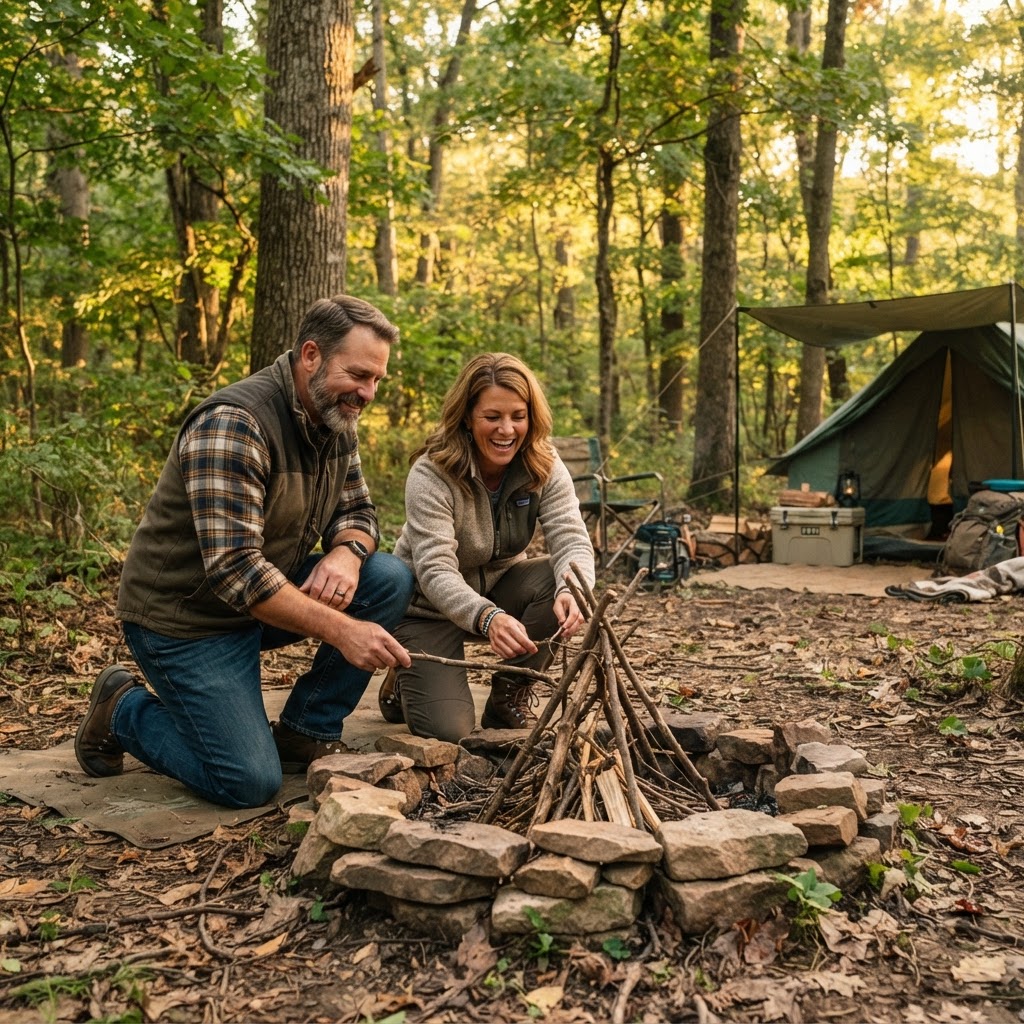
To make a teepee fire, place a loose bundle of tinder in the center of the fire ring. Lean kindling around it in a cone shape, leaving small gaps so air can reach the center. Add a few slightly thicker sticks around the outside, but avoid packing the structure tightly. Light the tinder at the base and let the flame climb through the kindling before adding larger pieces one at a time.
The teepee is useful when you want a quick flame for brief warmth or to start cooking, because the angled sticks direct heat upward. It also tends to burn through fuel faster than a more compact arrangement. Keep the structure low and stable. If a stick starts to fall out of the ring, use a stick or suitable fire tool to guide it back, never your hands.
The Long-Burning Log Cabin Structure
A log cabin fire uses two parallel pieces of fuel as a base, then another pair placed across them, with each layer set at a right angle to the one below. Build only a small, stable square, leaving room in the center for tinder and kindling. Light the center, then add fuel gradually as the fire settles. The arrangement allows airflow through the middle while the stacked sides help contain the burning wood.
This structure can provide a steadier bed of coals for cooking or longer warmth, but it requires more fuel and attention than a small teepee. Large logs can roll, collapse, or throw embers if the stack is too tall. Keep every piece inside the fire ring and use only enough wood for your purpose. For cooking, let flames die down to a consistent bed of coals before placing food near the heat, and keep food preparation separate from handling fuel.
Not every situation calls for a wood fire. A campground may provide a ring, grill, or another approved cooking area, and local restrictions may rule out open flames altogether. Follow posted State Park Regulations and staff instructions rather than adapting a fire structure to an unsuitable location. The best setup is the one that meets your needs while remaining small, stable, and permitted.
Campfire Safety And Maintenance Comparison
Good campfire safety is an ongoing task, not a quick check when the match is struck. Indiana terrain can include wooded campsites, open fields, and areas where dry leaves or grass surround a fire ring. The exact hazards change with the site and season. Before lighting, inspect the immediate area, check the forecast, look for posted restrictions, and ask staff about local rules. Fire bans and campground policies can change quickly during dry or windy weather.
Keep the fire attended by a responsible adult at all times. Children and pets should have a clear boundary, and chairs, tents, clothing, and other combustible items should be kept well away. Do not use gasoline or other accelerants. Never burn trash, plastic, or food packaging; these materials can release harmful smoke and leave debris. If conditions become unsafe, stop adding wood and extinguish the fire.
Essential Tools For Fire Management
Keep a dependable supply of water beside the fire before you light it. A shovel or another suitable way to stir and spread coals is also useful, as is a fire poker or long stick for moving burning wood without reaching into the flames. Make sure everyone in your group knows where the water is and who is responsible for the fire. These simple preparations can prevent a small problem from becoming an emergency.
Use tools carefully and keep them outside the fire when not in use. Do not leave a burning stick or glowing coal on the ground, where it can ignite dry leaves. Avoid moving hot ashes to another part of the campsite. If you are camping without a vehicle or have limited supplies, plan ahead so water for extinguishing the fire is not also needed for drinking. In wilderness survival, conserving resources matters, but a campfire should never be lit unless you can manage and put it out safely.
Terrain affects how you manage the site. In a wooded area, watch for low branches, leaf litter, and roots near the ring. In an open, grassy campsite, look for dry grass and wind direction. On a slope, sparks and rolling embers can travel downhill, so use only the designated fire area and do not build a fire where runoff or loose fuel could carry embers away.
Guidelines For Complete Fire Extinguishment
Begin extinguishing the fire well before bedtime or departure. Let the wood burn down to a manageable amount, then pour water slowly over the ashes and coals. Stir the mixture with a shovel or stick so water reaches beneath the surface. Add more water, stir again, and repeat until there is no smoke, no glow, and no hissing sound. A layer of ash can hide hot embers, so do not judge by appearance alone.
Check for warmth carefully without putting your hand into the ashes. Hold the back of your hand near the fire bed, close enough to sense heat but not to touch it. If you feel warmth, continue soaking and stirring. Do not bury a fire to extinguish it; buried coals can remain hot and later reignite. Leave the site only when the ashes and coals are cold to the touch and the area is safe according to campground guidance.
Pro tip: Treat extinguishing as part of your fire building plan. Keep enough water available from the start, and leave time to soak and stir the coals rather than waiting until everyone is tired and ready for bed.
These habits are useful beyond Indiana, but the details of fire management depend on local rules and conditions. Campers heading to other landscapes can compare the approach with these practical tips for finding quiet campsites in Arkansas, where choosing an appropriate spot is also part of leaving the surrounding environment undisturbed.
Frequently Asked Questions
Can I collect downed wood in Indiana state parks?
Do not assume that fallen wood is available to collect. Rules differ by property and campground, and gathering any wood may be prohibited or limited to designated areas. Ask park staff or check the current Indiana Department of Natural Resources and campground guidance before collecting. If wood is not permitted to be gathered, buy approved firewood near the campsite instead.
What should I do if my campfire sparks during a dry spell?
Stop adding wood immediately and use water to extinguish the fire if sparks are escaping or the area is dry. Pour water carefully over the fire, stir the coals, and repeat until there is no smoke, glow, or warmth. If an ember starts a spot fire beyond the ring, alert campground staff or call emergency services if it cannot be safely controlled. Do not light a fire during a burn restriction or when the wind is carrying sparks.
How do I know if my fire is completely out before leaving?
Soak the ashes and coals with water, stir them to expose hidden embers, and soak them again. Repeat until the fire bed is cold to the touch, with no glowing coals, smoke, warmth, or hissing. Do not leave merely because the flames have disappeared, and never bury hot embers under dirt or ash.
Final Thoughts
A successful Indiana campfire is small, permitted, built with suitable local fuel, and watched from the first spark until the last coal is cold. Check current rules before lighting, keep water close, and make extinguishing part of the plan so your campsite stays safe for your group and the forest around it.