
TL;DR:
- Pack a durable, weather ready kit anchored by layered clothing systems, a four season shelter, and reliable navigation tools to handle Alaskan weather patterns.
- Practice strict scent control, use bear spray correctly, and follow campground rules to reduce encounters with bears and other wildlife.
- Choose front country for easier logistics, backcountry for solitude after securing permits, and always follow Leave No Trace principles to protect the landscape.
Imagine waking up to the sight of a glacier while sipping coffee, then realizing the reality of surviving in the vast Alaskan wilderness. That thrill comes with real planning. Camping in Alaska rewards careful preparation more than any other state, because weather moves fast, wildlife is everywhere, and services can be hours away.
In this guide I will walk you through gear choices, wildlife strategies, and how to pick the right camping environment so you trade the fear of the unknown for a confident, unforgettable trip in the Last Frontier.
Table of Contents
- Essential Gear for the Last Frontier
- Wildlife Safety and Bear Awareness
- Comparing Camping Environments in Alaska
- Frequently Asked Questions
- Final Thoughts
Essential Gear for the Last Frontier, Camping in Alaska
Start with the mindset that Alaska is a place of extremes. Alaskan weather patterns can shift from calm and sunny to wet and windy in a few hours. Your gear needs to be resilient, versatile, and lightweight enough for long approaches. Focus on clothing, shelter, navigation, and emergency items. These are the pieces that keep you safe and comfortable when services are far away.
Layering for unpredictable weather
Layered clothing systems are the backbone of comfort when camping in Alaska. Think of clothing in three main layers. The base layer moves moisture away from skin, the insulation layer holds warmth, and the outer shell blocks wind and rain. Because temperatures and conditions change throughout the day, you will add or remove layers often.
Choose fabrics that dry quickly and do not retain moisture. Pack extra insulating layers for nighttime and melt water. Gloves and a warm hat matter more than you might expect, because you lose heat faster from your head and hands. A lightweight packable jacket that compresses into its own pocket saves space and gives emergency warmth. Remember that wet clothing loses insulating value, so changing into dry garments at camp is a priority.
Choosing the right shelter for high winds
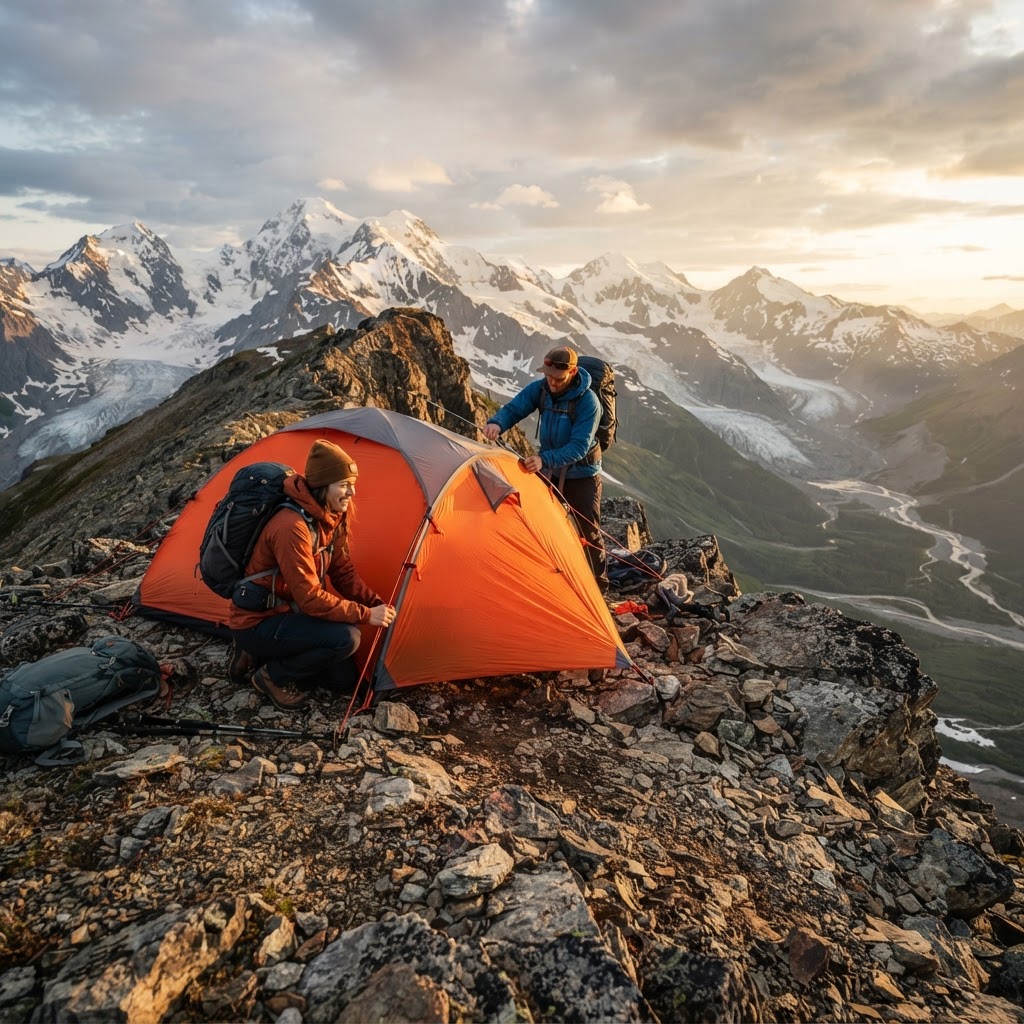
Tents rated for three season use will handle much of Alaska in summer, but if you expect extended exposure to high winds or snow, step up to a four season shelter. Look for a low profile design, strong pole geometry, and multiple tie down points. Guy lines and robust stakes are essential because gravel, tundra mat, and frozen ground require different anchoring techniques than forest soil.
Site selection multiplies the effectiveness of your shelter. Set up in a naturally sheltered spot when possible, such as behind a vegetation berm or a rock formation, while avoiding riverbeds that can flood. Stake the tent in all directions and use rocks or logs to secure lines on soft ground. Practice pitching in windy conditions at home so you can do it quickly when the weather turns.
Wildlife Safety and Bear Awareness
Alaska hosts abundant wildlife, including bears, moose, and wolves. Respecting animals and reducing attractants is a community responsibility. Proper behavior keeps you safe and protects wildlife from becoming dependent on humans. This section focuses on practical steps to coexist with apex predators while enjoying remote campsites and national parks like Denali National Park.
Mastering food storage and scent control
Food and scented items are the primary reasons bears come into camp. Mastering food storage means removing smells and access. Use approved storage methods, such as centralized food lockers when available at formal campgrounds, or certified bear proof containers in backcountry zones. When lockers are not present, hang food properly from sturdy trees, at least 10 feet above the ground and 4 feet out from the trunk, or use bear resistant canisters designed to keep smells contained.
Keep a strict cooking zone, set it away from where you sleep, and clean cookware and utensils immediately after use. Store toiletries, sunscreen, and dish soap with food or in the same sealed container. Dispose of waste according to site rules and pack out all trash. These steps reduce the chance of an encounter and are part of leaving the area better than you found it.
For quick reference on basic camping setups and tent management techniques that transfer well to Alaska, check the guide on tent camping best practices at 10 Best Tips and Tricks to Follow When Tent Camping, which covers many practical habits you will use in the field.
How and when to use bear spray correctly
Bear spray is a primary non lethal deterrent and should be carried where legal. Know the spray’s effective range and practice taking it out of the holster quickly. The general steps are, secure the safety tab, hold the can with two hands, aim slightly downward, and create a barrier between you and the animal. Deploy when the bear is charging or about to make contact, not simply when it is far away and curious. Training with inert practice canisters in a safe area builds muscle memory.
Carry bear spray in an accessible location, such as a hip holster or chest pocket. If you are hiking in Denali National Park or other backcountry regions, local regulations often recommend or require visitors to carry deterrents. Replace cans after use and check expiration dates before long trips. Bear spray works best when multiple people know how to use it and keep clear communication about who will act in an emergency.
Comparing Camping Environments in Alaska
Choosing where to camp in Alaska depends on your comfort level with remoteness, your logistical bandwidth, and what kind of scenery you prefer. Options run from well serviced campgrounds near highways to true backcountry that requires multi day planning. Each setting has different risks and rewards. Below is a breakdown to help you pick the right experience for your skill level and goals.
Front-country vs. backcountry dynamics
Front country sites are ideal if you want scenic views with convenience. You will find established campsites, designated food storage, and easier emergency access. These areas are perfect for families and those new to Alaska. Expect more visitors and stricter campground rules designed to protect wildlife and habitats.
Backcountry camping offers solitude and the chance to see untouched landscapes. This environment requires navigation skills, waterproof and layered gear, and the discipline to leave no trace. In backcountry settings you are responsible for your safety and for minimizing your footprint. If you want practice planning routes, water sources, and daily mileage, review backpacking fundamentals at 10 Best Tips for Enjoying Your Next Backpacking Adventure Trips before heading into remote terrain.
Permit requirements for remote areas
Many of Alaska’s remote areas, including sensitive zones inside national parks and wildlife sanctuaries, require permits for overnight stays. Permits help manage impact and track usage in fragile ecosystems. Before you go, check the specific rules for your destination. Bring documentation and follow route restrictions if they exist. When flying into or out of areas, coordinate with the operator and confirm landing and pickup points to avoid being stranded.
Pro tip: Practice packing and setting up your full kit at home in variable weather. A staged trial trip reveals missing items and teaches you how to layer quickly when conditions change.
Frequently Asked Questions
What is the best time of year for camping in Alaska?
The prime window for most campers is late May through early September. This period gives the warmest average temperatures and the longest daylight hours. However, early season can bring unstable spring conditions and late season may have cold nights and early snowfall. If you want warmer nights and more insects, June and July are standard. For fewer crowds and dramatic autumn colors, August into September is rewarding but prepare for colder nights and shorter days.
Do I really need bear spray while camping in Alaska?
Yes, carrying bear spray is strongly recommended in many parts of Alaska, and required in some managed backcountry areas. It is an effective, non lethal deterrent when used correctly. Remember to store it where you can reach it quickly, and make sure everyone in your group knows how to use it. While proper food storage and behavior reduce risks, bear spray offers last line protection during close encounters.
Can I find campsites with electricity and running water in Alaska?
Yes, you can find campgrounds with amenities such as electricity and running water in populated areas and near major parks. These front country sites offer comfort for travelers who prefer basic services. However, once you move into remote regions and backcountry zones, such amenities disappear. Plan accordingly and do not assume services are available beyond the main visitor centers and private campgrounds.
Final Thoughts
Camping in Alaska is an incredible adventure if you prepare for the environment, wildlife, and logistics. Pack smart, respect wildlife using Leave No Trace principles, and choose the camping style that matches your experience level for a safe and memorable time in the Last Frontier.